




The acronym CAPI stands for Cut, Abrasion, Puncture, and Impact, and represent the primary forms of protection covered in the ANSI standards and the baseline classification of all types of safety gloves.
Keeping these standards in mind will help you guard against the majority of hand injury threats across a variety of industries such as construction, manufacturing, fabrication, warehousing, and basically every other form of hands-on work.
Each of the scales shown here demonstrate ascending levels of protection from different forms of contact. When selecting a glove make sure that you have the proper level of protection for your specific job across all potential levels of hazardous contact.
THE PERFECT FIT FOR FUNCTION

What are your workers handling? Sharp Objects? Chemicals? Small Nuts and Bolts? Power Tools? Oils or Liquids?
Where are they working? A Construction Site? A Lab? A Forge? Is It Cold?
What substances are present? Hot Steam? Molten Metals? Chemicals? High Voltage?
All of these must be considered to ensure proper safety in all present or potential conditions:
- Chemical Resistance: Helps prevent hand contact to toxic, dangerous, or reactive chemicals.
- Oil Resistance: Helps prevent loss of grip and tool slippage in oily environments, essential to preventing accidents from dropped tools or over extension.
- Cold Resistance: Prevents numbness and frostbite in cold environments and winter months.
- Vibration Resistance: Helps prevent nerve, blood vessel, muscle, bone, and joint damage from high-frequency vibrations from power tools such as grinders, saws, and sanders in combination with proper pacing and breaks.
- Voltage Resistance: Helps prevent electrical shock from high voltage wiring and electrical current.
- Water Resistance: Extends the life of the glove and may keep hands dry in wet work, high humidity, coastal, and rainy environments.
Also worth considering is dexterity: which improves hand mobility and helps the worker maintain grip on tools or small objects, preventing dropped object accidents and hand injury.
The key factor in dexterity is Glove Gauge, which tells you the number of knits per inch. Although you might think a high glove gauge would lead to a thicker glove, the opposite is actually true. This is because smaller knits requires thinner threads, which also lowers the weight of a glove, improving comfort and dexterity.
Pair this with engineered fabrics and you now have cut, abrasion, and puncture resistant materials that no longer compromise dexterity, providing the best all-around injury prevention for general labor.
THE RIGHT COATING MAKES THE DIFFERENCE

Some glove materials may offer a good deal of base level protection, but when it comes to grip and oil, liquid, heat, or cold resistance, it's often dependent on the coating.
Palm coatings offer an additional level of protection against a variety of hazards as well as secondary accidents from lost grip. To help you choose the right glove for the job, here are some key factors and strengths for the top 5 forms of glove coatings. Some of these coatings are more common as full coated gloves for specific applications, but if that's your worksite, then you'll need every ounce of protection you can get.
MAXIMIZE YOUR BUDGET

Choosing the right glove is a balance between protection, ease of use, and cost value. Even though it's tempting to go for the higher safety ratings, that can sometimes prove not as effective when a lower rating is all that's needed, and may even restrict the user's hands by being thicker and less dexterous.
Meanwhile choosing the cheapest gloves you can find may also lead to unintended consequences. In fact, many cheap glove manufacturers have been known to falsify protection ratings, claiming certified ANSI level protection when they haven't been properly tested by a 3rd party.
To make matters worse, many gloves are simply thrown away or go unused either because they become dirty or workers are not properly trained on their use.
All of these pitfalls, in addition to other factors, can lead to a loss in protection as well as unintended costs.
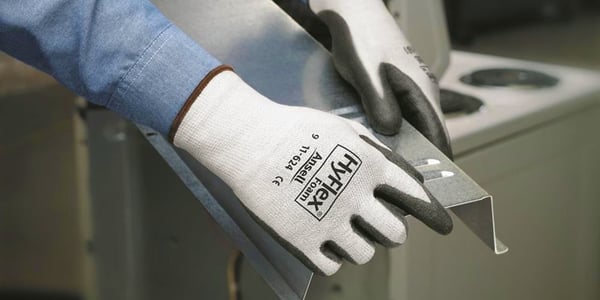
Cut Protection 101:
Understanding the Basics
In the demanding world of industrial work, our hands are our most valuable tools. From handling sharp metals to intricate machinery, the risk of cuts is ever-present. That's why understanding the levels of cut protection provided by gloves isn't just good practice – it's crucial for safety and productivity.
This article will break down the essentials of cut protection, focusing on the widely used ASTM/ANSI 105 standard, contrasting it with the EN388 system, and guiding you on how to choose the right gloves for the job.
The Science Behind the Shield: How Cut Protection is Measured
When you see a glove boasting "cut-resistant," what does that actually mean? It refers to the glove's ability to withstand a sharp object under pressure. Two primary international standards are used to measure this resistance: ASTM/ANSI 105 and EN388.
ASTM/ANSI 105: The American Standard for Cut Protection
The American Society for Testing and Materials (ASTM) and the American National Standards Institute (ANSI) developed the ASTM/ANSI 105 standard, which is prevalent in North America. This system uses a TDM-100 machine to measure the force required for a blade to cut through a glove material. The result is expressed in grams, and then assigned a letter grade from A1 to A9.
| ANSI Cut Level | Force to Cut (Grams) | Risk Category | Sample Tasks |
| A1 | 200-499 | Low Risk | General assembly, light material handling, packaging |
| A2 | 500-999 | Low-Medium Risk | Construction, automotive assembly, warehousing |
| A3 | 1000-1499 | Medium Risk | HVAC, light metal fabrication, maintenance |
| A4 | 1500-2199 | Medium-High Risk | Drywall installation, rebar tying, glass handling (small) |
| A5 | 2200-2999 | High Risk | Metal stamping, automotive manufacturing, general sheet metal work |
| A6 | 3000-3999 | Very High Risk | Fabrication of sharp components, heavy duty glass handling |
| A7 | 4000-4999 | Extreme Risk | Handling razor-sharp edges, extensive sheet metal work |
| A8 | 5000-5999 | Extreme Risk | Demolition with sharp debris, extremely sharp material handling |
| A9 | 6000+ | Extreme Risk | Specialized tasks with extreme cut hazards |
EN388: The European Standard for Mechanical Risks
The EN388 standard is the European equivalent and is more broadly focused on mechanical risks, including abrasion, tear, puncture, and cut resistance. For cut resistance, EN388 historically used a "Coupe Test" where a circular blade moved back and forth across the material. This test yields a number from 1 to 5, with 5 being the highest.
However, a significant update to EN388 in 2016 introduced a TDM-100 test (similar to ANSI) for higher cut levels, indicated by an "X" or a letter (A-F) after the initial four digits, specifically for materials that dull the Coupe Test blade. This means a glove might have an EN388 rating like "4X42F," where "F" represents a very high cut resistance as per the TDM-100 test.
Key Differences Between ASTM/ANSI 105 and EN388
The primary difference lies in the testing methodology and the granularity of the rating.
- ASTM/ANSI 105 focuses solely on cut resistance using the TDM-100 machine, offering a more precise, nine-level scale (A1-A9).
- EN388 provides a broader assessment of mechanical risks. While its initial cut test (Coupe Test) is less precise for higher cut levels, the updated standard with the TDM-100 test for higher levels (indicated by letters A-F) now offers a closer comparison to ANSI.
It's important to note that while efforts are made to harmonize these standards, a direct conversion isn't always perfect due to slight variations in testing procedures and blade types.
Choosing the Right Cut Protection: A Strategic Approach
Selecting the appropriate cut protection isn't a "one-size-fits-all" scenario. It requires a careful assessment of three key factors:
- Environment:
- Are you working with dry or oily materials? Some cut-resistant materials lose effectiveness when saturated with oil.
- Is there a risk of puncture in addition to cuts? Consider gloves with combined cut and puncture resistance.
- Are there extreme temperatures? The glove material needs to withstand the environment without compromising protection.
- Material Being Handled:
- What is the sharpness of the material? (e.g., sheet metal, glass, plastic, wood)
- What is the weight and size of the material? Heavier, larger materials increase the risk of deeper cuts.
- Are there burrs or rough edges? Even seemingly dull materials can cause severe cuts if they have sharp burrs.
- Cut Level Required:
- Perform a thorough risk assessment. Identify all potential cut hazards in the task.
- Consider the force and direction of potential contact. Is it a glancing blow or direct pressure?
- Err on the side of caution. If in doubt, choose a higher cut level. It's always better to be overprotected than underprotected.
Real-World Application: Matching Gloves to Tasks
Let's put this into practice:
- For light assembly work with minimal sharp edges, an ANSI A1 or A2 glove might suffice, offering basic protection and good dexterity.
- When handling general construction materials like wood or concrete, where incidental contact with rough edges is possible, an ANSI A3 or A4 glove would be a good choice.
- Working with sheet metal, glass, or in automotive manufacturing often necessitates ANSI A5 or A6 gloves due to the high risk of severe lacerations.
- Specialized tasks in industries like demolition or heavy fabrication that involve razor-sharp materials and extreme forces may require ANSI A7, A8, or A9 gloves for maximum protection.
The Bottom Line: Safety First
Understanding cut protection levels is not just about compliance; it's about safeguarding the hands that drive our industries. By carefully assessing the risks and choosing gloves with the appropriate ASTM/ANSI 105 or EN388 rating, you're not just buying a piece of equipment – you're investing in the well-being and productivity of your workforce. Stay informed, stay protected, and keep those hands safe!
goSafe offers a wide variety of Hand Protection suitable for every task imaginable. Contact Us for more information about our Hand Protection selections or any questions related to safety and safety-related products.


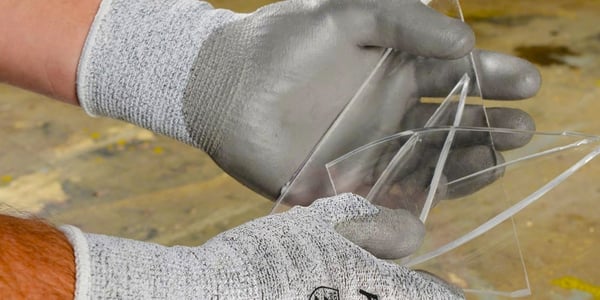
Understanding Palm Coatings:
Your Guide to Industrial Glove Protection
In the demanding world of industrial workplaces, hand protection isn't just a recommendation – it's a necessity. While the glove material itself provides a baseline of defense, it's often the palm coating that elevates a glove from simple coverage to specialized protection. Understanding the different types of palm coatings is crucial for selecting the right glove for the job, ensuring both safety and efficiency.
Palm coatings offer enhanced grip, abrasion resistance, cut protection, and chemical resistance, among other benefits, all tailored to specific work environments. Let's delve into the most common types of palm coatings you'll encounter on industrial gloves:
Nitrile Coatings
Nitrile is a synthetic rubber known for its excellent resistance to punctures, tears, abrasions, and a wide range of chemicals, including oils and greases. It's a popular choice for general-purpose work where durability and a good grip are essential.
- Appearance: Nitrile coatings typically have a smooth, sometimes slightly textured, finish. Colors can vary widely, from black and grey to brighter hues.
- Reasons for Choosing: Offers a good balance of durability, dexterity, and chemical resistance. A reliable all-rounder for many applications.
- Advantages: High abrasion and puncture resistance, good oil and grease resistance, no latex allergens.
- Subgroups:
- Flat Nitrile:
- Appearance: Smooth, solid coating.
- Reasons for Choosing: Provides an effective grip in slightly oily conditions, but best when used for a dry grip.
- Advantages: Excellent abrasion resistance, good for handling rough materials.
- Examples of Work: General assembly, automotive, manufacturing, material handling, construction.
- Foam Nitrile:
- Appearance: A porous, sponge-like texture, often with a matte finish.
- Reasons for Choosing: Offers superior grip in wet or oily conditions by absorbing liquids, allowing the glove to maintain contact with the surface. It also provides good breathability.
- Advantages: Enhanced wet/oily grip, increased dexterity, good breathability, reduces hand fatigue.
- Examples of Work: Precision assembly with oily parts, automotive repair, light engineering, logistics.
- Sandy Foam Nitrile:
- Appearance: A more aggressive, sandy or granular texture embedded within the foam.
- Reasons for Choosing: Provides an even more aggressive grip in extremely wet or oily environments compared to standard foam nitrile. The sandy texture creates additional friction.
- Advantages: Exceptional wet/oily grip, good abrasion resistance.
- Examples of Work: Handling slippery objects, wet or oily machinery maintenance, offshore oil and gas, fishing industry.
- Micro Foam Nitrile:
- Appearance: Very fine, almost imperceptible foamed texture, offering a sleek and close fit.
- Reasons for Choosing: Maximizes dexterity and tactile sensitivity while still providing good grip in light oil or dry conditions. It's designed for precision tasks.
- Advantages: High dexterity, excellent tactile sensitivity, good breathability, comfortable.
- Examples of Work: Electronics assembly, inspection, intricate wiring, handling small components.
- Flat Nitrile:
Polyurethane (PU) Coatings
Polyurethane coatings are renowned for their exceptional dexterity, tactile sensitivity, and flexibility. They are generally thinner than other coatings, making them ideal for tasks requiring precision.
- Appearance: Typically very thin, smooth, and often transparent or translucent, allowing the underlying glove material to be visible.
- Reasons for Choosing: When high dexterity and a precise grip are paramount, especially in dry or slightly oily conditions.
- Advantages: Excellent dexterity, high tactile sensitivity, good abrasion resistance, breathable, lightweight.
- Examples of Work: Electronics assembly, intricate wiring, inspection, cleanroom applications, painting, quality control.
Latex Coatings
Natural rubber latex offers excellent elasticity, grip, and cut resistance. It provides a strong, tacky grip in both wet and dry conditions.
- Appearance: Can range from smooth to crinkled or textured (e.g., crinkle latex). Often has a slightly glossy finish.
- Reasons for Choosing: Superior grip in various conditions, good cut resistance, and flexibility.
- Advantages: Excellent grip, high elasticity, good abrasion and tear resistance, comfortable.
- Subgroups:
- Smooth Latex:
- Appearance: Uniform, smooth surface.
- Reasons for Choosing: Good all-around grip in dry and wet conditions, offers good dexterity.
- Advantages: Flexible, good general grip.
- Examples of Work: General assembly, construction, warehousing, gardening.
- Crinkle Latex:
- Appearance: A textured, wrinkled surface, often resembling a crinkled paper bag.
- Reasons for Choosing: Provides an aggressive, enhanced grip, especially in wet or slippery conditions, by creating more surface area for contact.
- Advantages: Superior wet/dry grip, good abrasion and tear resistance.
- Examples of Work: Material handling, construction, roofing, recycling, forestry.
- Considerations: Latex can cause allergic reactions in some individuals.
- Smooth Latex:
PVC (Polyvinyl Chloride) Coatings
PVC coatings are known for their strong resistance to certain chemicals, particularly caustics and acids, and good abrasion resistance. They tend to be more rigid than other coatings.
- Appearance: Typically smooth and often has a slightly glossy or tacky feel. Colors can vary.
- Reasons for Choosing: When chemical splash protection and good abrasion resistance are needed, especially with petroleum products and some acids.
- Advantages: Good chemical resistance (oils, greases, acids, caustics), abrasion resistance, waterproof.
- Examples of Work: Petrochemical, general chemical handling, fishing, plumbing, some automotive applications.
- Considerations: Less flexible and offers less dexterity compared to nitrile or PU. Can become stiff in cold temperatures.
Silicone Coatings
Silicone coatings offer excellent high-temperature resistance and a very strong, non-slip grip, particularly on smooth or polished surfaces. They are also highly flexible and durable.
- Appearance: Often clear or translucent, with a slightly tacky but smooth feel.
- Reasons for Choosing: For applications requiring high heat resistance, a superior grip on glass or other smooth materials, and good flexibility.
- Advantages: Excellent high-temperature resistance, superior grip on smooth surfaces, highly flexible, good durability.
- Examples of Work: Glass handling, high-temperature applications, automotive (e.g., handling hot engine parts), electronics manufacturing.
Neoprene Coatings
Neoprene is a synthetic rubber that excels in its resistance to a wide range of chemicals, including oils, acids, solvents, and some caustics. It also offers good flexibility and thermal insulation.
- Appearance: Can be smooth or textured, often with a matte finish. Typically black, but other colors are available.
- Reasons for Choosing: When a broad spectrum of chemical protection is required, along with good flexibility and some thermal protection.
- Advantages: Broad chemical resistance, good abrasion resistance, flexibility, good grip in wet conditions.
- Examples of Work: Chemical processing, laboratory work, automotive repair (exposure to various fluids), cleaning and maintenance with chemicals.
Beyond These Coatings: A Glimpse at Other Protective Options
While the coatings detailed above cover a vast array of industrial applications, it's important to remember that the world of protective gloves is constantly evolving. Other specialized coatings and glove types exist for very specific hazards. Examples include:
- Cut-Resistant Coatings/Liners: Often incorporate high-performance fibers like HPPE (High-Performance Polyethylene) or para-aramid for enhanced cut protection.
- Impact-Resistant Gloves: Feature thermoplastic rubber (TPR) or other materials on the back of the hand to absorb impact.
- Thermal Liners: Insulated gloves for cold or hot environments.
Relevant Standards: Ensuring Your Safety
When selecting gloves with palm coatings, it's crucial to be aware of relevant safety standards. These standards help ensure that gloves provide the protection they claim.
- ANSI/ISEA 105-2016 (American National Standards Institute / International Safety Equipment Association): This standard classifies and rates gloves based on various performance characteristics, including:
- Abrasion Resistance: (Levels 0-6)
- Cut Resistance: (Levels A1-A9)
- Tear Resistance: (Levels 0-4)
- Puncture Resistance: (Levels 0-5)
- Chemical Permeation: (Breakthrough time for various chemicals)
- OSHA (Occupational Safety and Health Administration): OSHA regulations mandate that employers provide appropriate personal protective equipment (PPE), including hand protection, when hazards are present or likely to be present. While OSHA doesn't specify particular coatings, it references consensus standards like ANSI/ISEA 105 to guide employers in selecting suitable gloves based on hazard assessments.
By understanding the unique properties of each palm coating and considering the specific demands of your work environment, you can make informed decisions that enhance safety, improve productivity, and ultimately protect your most valuable tools: your hands. Always refer to the manufacturer's specifications and relevant safety standards when choosing the right glove for your task.

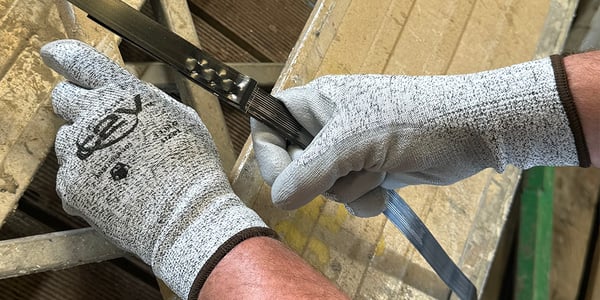
Guarding Your Grips:
Why Abrasion Resistance is Key to Industrial Glove Selection
In the demanding, often dangerous world of industrial environments, hands are constantly exposed to hazards. From handling rough materials to operating machinery, the wear and tear on workers' hands can be significant. This is where the unsung hero of industrial hand protection, abrasion resistance, steps into the spotlight. More than just a buzzword, understanding and selecting gloves with appropriate abrasion resistance levels is critical for worker safety, productivity, and ultimately, your bottom line.
The Gritty Reality: What is Abrasion Resistance?
Abrasion resistance refers to a glove's ability to withstand scraping, rubbing, and friction without wearing through. In industrial settings, this translates directly to how long a glove will protect a worker's hands from cuts, scrapes, and punctures when handling abrasive materials like concrete, rough metals, wood, or even repeatedly gripping tools.
Industry Standards: Your Guide to Protection
To help employers and workers make informed decisions, industry standards provide a clear framework for evaluating glove performance. In North America, the ANSI/ISEA 105 standard is the primary benchmark, while in Europe, the EN 388 standard is widely recognized. Both standards classify gloves based on various protective properties, including abrasion resistance.
ANSI/ISEA 105 Abrasion Resistance Levels:
The ANSI/ISEA 105 standard measures abrasion resistance on a scale from Level 0 to Level 6, with Level 6 offering the highest protection. This rating is determined by testing the number of cycles an abrasive wheel takes to wear through the glove material under specific loads.
- Level 0: Minimal abrasion resistance, suitable for very light tasks with little friction.
- Level 1: Basic protection for tasks with occasional, light abrasion. (e.g., general material handling, warehouse work)
- Level 2: Moderate resistance for tasks involving some wear and tear. (e.g., assembly work, light construction)
- Level 3: Good abrasion resistance, ideal for handling rough surfaces or tools regularly. (e.g., material handling, packaging, moderate construction)
- Level 4: High abrasion resistance, for environments with significant abrasion hazards. (e.g., sheet metal handling, heavy-duty assembly, metal fabrication)
- Level 5: Very high abrasion resistance, designed for heavy-duty work with frequent contact with abrasive materials. (e.g., high-abrasion environments, frequent contact with rough surfaces)
- Level 6: Maximum abrasion resistance, offering the longest durability and best protection for extreme conditions and continuous contact with highly abrasive materials. (e.g., continuous contact with steel, glass, or heavy machinery parts)
OSHA and Hand Protection:
The Occupational Safety and Health Administration (OSHA) mandates that employers select and require employees to use appropriate hand protection when hands are exposed to hazards such as severe abrasions, among others (OSHA Standard 1910.138 - Hand Protection). This highlights the legal and ethical responsibility of employers to assess risks and provide suitable PPE, with abrasion resistance being a key consideration. While OSHA doesn't set specific abrasion levels, it references ANSI standards as generally accepted safety guidelines.
Matching the Glove to the Grind: Task-Specific Selection
Choosing the right abrasion resistance level isn't about always picking the highest number. It's about a careful assessment of the task at hand, the materials involved, and the duration of exposure.
| Task/Environment | Appropriate Abrasion Resistance (ANSI/ISEA 105) |
| Light-Duty Tasks (e.g., data entry, light assembly) | Level 0-1 |
| General Material Handling, Packaging, Warehouse Work | Level 1-2 |
| Light Construction, Maintenance, Automotive Assembly | Level 2-3 |
| Medium-Duty Fabrication, Handling Moderately Rough Materials | Level 3-4 |
| Heavy Construction, Metal Fabrication, Recycling | Level 4-5 |
| Working with Sharp Sheet Metal, Glass, Continuous Contact with Rough Materials, Mining | Level 5-6 |
| Extreme Abrasion, Heavy Machinery Operations, Demolition | Level 6 |
The Trade-Off: Pros and Cons of Increasing Abrasion Resistance
While higher abrasion resistance generally means greater protection and durability, it often comes with certain trade-offs.
Pros of Increasing Abrasion Resistance:
- Enhanced Hand Protection: Directly reduces the risk of cuts, scrapes, and blisters from abrasive surfaces and materials.
- Increased Glove Lifespan: Gloves last longer, reducing the frequency of replacements and saving on PPE costs.
- Improved Productivity: Workers can focus on tasks without concerns about glove wear, leading to fewer interruptions and greater efficiency.
- Cost-Effectiveness (Long-Term): Though initial cost might be higher, the extended lifespan of highly abrasion-resistant gloves often results in lower overall expenditure.
- Reduced Waste: Longer-lasting gloves contribute to sustainability efforts by minimizing discarded PPE.
Cons of Increasing Abrasion Resistance:
- Decreased Dexterity: Thicker, more robust materials typically used for higher abrasion resistance can reduce tactile sensitivity and fine motor control, making it challenging for tasks requiring precision.
- Reduced Comfort: Less flexible and heavier materials can lead to increased hand fatigue and discomfort, especially during prolonged use.
- Lower Breathability: Denser materials may trap heat and moisture, leading to sweaty hands and potential skin irritation.
- Higher Initial Cost: Gloves with superior abrasion resistance often have a higher upfront price tag.
- Potential for Over-Protection: Selecting a glove with an unnecessarily high abrasion rating for a low-hazard task can lead to discomfort, reduced dexterity, and wasted resources.
Conclusion: A Calculated Choice for Safety and Efficiency
Abrasion resistance is a fundamental aspect of industrial glove selection that directly impacts worker safety and operational efficiency. By understanding the ANSI/ISEA 105 and EN 388 standards, and by carefully evaluating the specific hazards of each task, employers can make informed decisions that protect their workforce, extend the life of their PPE, and contribute to a safer, more productive industrial environment. Remember, the goal isn't just to buy gloves, but to invest in the right protection for every hand, every task, every day.

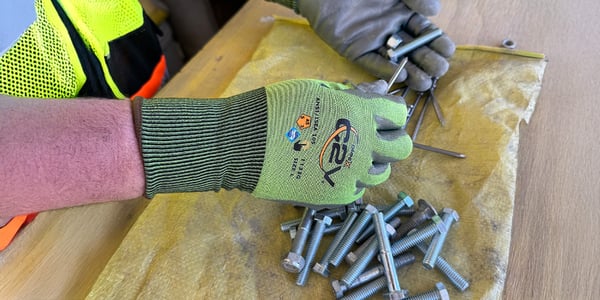
Understanding Puncture Resistance in Industrial Gloves:
A Comprehensive Guide
In the demanding and often dangerous world of industrial work, your hands are your most valuable tools. Protecting them from various hazards, especially punctures, is paramount. But with a dizzying array of gloves claiming "puncture resistance," how do you actually choose the right level of protection? This article will delve into the basics of puncture resistance in industrial gloves, exploring the rating systems, their differences, and how to make an informed decision for your specific tasks.
Why Puncture Resistance Matters
From handling sharp metal scraps to working with needles, the risk of a puncture wound is ever-present in many industries. A simple puncture can lead to:
- Pain and Injury: Immediate discomfort and potential for deep tissue damage.
- Infection: Open wounds are breeding grounds for bacteria.
- Lost Time and Productivity: Recovery means time away from work, impacting efficiency.
- Contamination: In medical or food handling settings, a puncture can contaminate products.
Choosing gloves with appropriate puncture resistance isn't just about comfort; it's about safety, health, and productivity.
The Rating Systems: ANSI/ISEA 105 vs. EN 388
ANSI/ISEA 105 and EN 388 are two of the most widely recognized standards for rating the mechanical risks of work gloves. While they both assess puncture resistance, their testing methods and classification systems have key differences.Testing Method
Both standards use a similar test to measure blunt puncture resistance against objects like nails or metal splinters. This involves a universal testing machine with a probe (a stylus 4.5 mm in diameter with a rounded 1 mm tip) that pushes into a glove material sample at a constant speed, measuring the force in newtons required to puncture it.The main difference is that the ANSI/ISEA 105 standard also includes an additional test for hypodermic needle puncture resistance using a much finer 25-gauge needle. This second test addresses puncture hazards in specific industries, such as medical, sanitation, and recycling. EN 388 does not have a separate test for hypodermic needles.
Classification and Ratings
Both standards use a numerical scale, but the number of levels and the force ranges differ.
ANSI/ISEA 105
- Scale: Uses a 1-5 scale for blunt puncture resistance.
- Range: The ratings are based on the force required for puncture, from 10 Newtons (N) for Level 1 to 150+ N for Level 5.
- Needle Puncture: The separate hypodermic needle test also has its own 1-5 rating scale, with Level 5 resisting 10+ N of force.
EN 388
- Scale: Uses a 1-4 scale for blunt puncture resistance.
- Range: The ratings are based on the force required, from 20 N for Level 1 to 100+ N for Level 4.
Key Takeaways
ANSI/ISEA 105
- Offers a more granular 5-level rating scale for blunt punctures.
- Includes a separate, crucial test and rating for hypodermic needle punctures. This makes it a more comprehensive standard for workers facing fine-point hazards.
- The standard is voluntary and is widely used in the United States and North America.
EN 388
- Uses a concise 4-level rating scale for blunt punctures.
- The test method is not designed to assess protection against fine, sharp objects like hypodermic needles, which is an important limitation to remember.
- This is the primary standard for gloves in Europe but is also recognized and used internationally.
Why the Difference Matters
While both standards evaluate similar hazards (cut, abrasion, puncture, tear, impact), the different methodologies and scales mean a direct conversion between the two is not possible.
- A high rating under one standard does not automatically mean the same performance under the other.
- It is crucial to understand the specific standard and rating on the glove to accurately assess its protective qualities.
ANSI Puncture Resistance Levels: A Simple Breakdown
The ANSI/ISEA 105 standard provides a classification system for the puncture resistance of gloves, measuring how much force is required for a blunt probe to pierce the material. This scale helps you select the appropriate hand protection for specific tasks and environments. The ratings range from A1 to A5, with higher levels indicating greater resistance. The testing is done using a 4.5mm steel stylus that resembles a ballpoint pen.
Here's a simplified guide to the ANSI Puncture Resistance levels:
Puncture Resistance Scale (A1-A5)
| Puncture Resistance Level | Force Rating (in Newtons) | Typical Environments & Materials |
| A1 | 10-19 N | Light material handling, general assembly, landscaping, and warehouse work where risks of puncturing are minimal. Typical threats include thorns or light tools. |
| A2 | 20-59 N | Light-duty construction, small parts assembly, and handling of materials with small burrs or sharp edges. Examples include small screws, nails, or metal fragments. |
| A3 | 60-99 N | Packaging, moderate material handling, and general industrial work where there is a risk of a puncture from sharp objects. Examples include handling cartons with staples or moderate-sized tools. |
| A4 | 100-149 N | Sheet metal handling, general industrial work, and applications where a higher level of protection is needed. Examples include working with sheet metal or sharp machine parts. |
| A5 | 150 + N | Heavy industrial work, demolition, and high-risk environments with significant puncture hazards. Examples include handling scrap metal, broken glass, or other heavy, sharp materials. |
Always err on the side of caution. If there's uncertainty, choose a higher level of protection.
Beyond the Ratings: Other Considerations
- Dexterity: Higher puncture resistance often comes with thicker materials, potentially reducing dexterity. Balance protection with the need for fine motor skills.
- Grip: Ensure the glove material and coating provide adequate grip for the tasks, especially in oily or wet conditions.
- Comfort and Fit: Ill-fitting or uncomfortable gloves are less likely to be worn consistently, negating their protective benefits.
- Other Hazards: Don't forget other potential hazards like cuts, abrasions, chemicals, or extreme temperatures. Many gloves offer multi-hazard protection.
- Durability: How long will the gloves last in your specific work environment? Consider tear and abrasion resistance.
Conclusion
Understanding puncture resistance ratings is a critical step towards creating a safer work environment. By differentiating between the ANSI and EN 388 standards and carefully assessing your specific hazards, you can confidently select gloves that provide the right level of protection for your hands. Remember, the best glove is the one that's worn, so prioritize fit, comfort, and comprehensive protection to keep your most valuable tools safe and productive.

Don't Get Sidelined:
Choosing the Right Impact-Resistant Gloves for Your Job
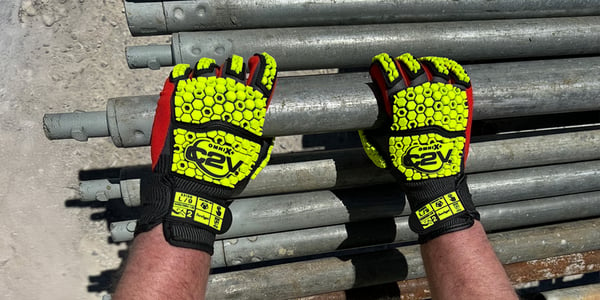
Selecting the right industrial glove requires a thorough assessment of workplace hazards, and impact resistance is a critical factor often overlooked. The back of the hand, knuckles, and fingers are highly susceptible to crush and pinch injuries from dropped tools, machinery, and heavy equipment. Choosing gloves with appropriate impact protection can significantly reduce the risk of severe injuries.
Understanding Impact Resistance Standards
The primary standard for classifying impact-resistant gloves in the U.S. is ANSI/ISEA 138-2019, which was developed to create a uniform system for evaluating and labeling impact protection. This standard tests a glove's ability to dissipate force from impacts to the back of the hand, fingers, and knuckles. The test involves dropping a weighted striker on the glove and measuring the amount of force transmitted through the material.
The ANSI/ISEA 138-2019 standard assigns one of three performance levels, which must be clearly marked on the glove. The lower the transmitted force, the higher the rating.
- Level 1: Transmitted force is ≤ 9.0 kilonewtons (kN). This provides a baseline of protection for minor bumps and scrapes.
- Level 2: Transmitted force is ≤ 6.5 kN. This offers moderate protection for common industrial impacts.
- Level 3: Transmitted force is ≤ 4.0 kN. This is the highest level of protection, designed for high-impact and extreme conditions.
While OSHA (Occupational Safety and Health Administration) has not adopted ANSI/ISEA 138-2019 as a legal standard, its regulations require employers to select and provide appropriate personal protective equipment (PPE), including hand protection, based on an evaluation of workplace hazards. This means that even without a specific OSHA standard for impact resistance, employers have a legal and ethical obligation to protect workers from potential hand injuries, and using gloves that meet the ANSI/ISEA 138 standard is a recognized best practice.
Choosing the Right Impact-Resistant Glove
Selecting the correct impact resistance level depends entirely on the specific tasks and hazards involved. A proper hazard assessment is crucial for making the right choice.
| Task/Environment | Recommended Impact Level | Rationale |
| Light Assembly & General Handling | Level 1 | These tasks involve a risk of incidental bumps or minor contact with stationary objects. High dexterity is often needed, and a lightweight, flexible glove with minimal padding on the back of the hand is sufficient. |
| Construction & Manufacturing | Level 2 | Workers frequently handle materials, operate power tools, and work around machinery where there's a moderate risk of being struck by falling objects or getting hands pinched. Level 2 gloves provide a good balance between protection and dexterity. |
| Oil & Gas Drilling, Heavy Equipment Operation | Level 3 | These environments have a high risk of severe crushing injuries from heavy tools, pipes, and equipment. The robust protection of a Level 3 glove is essential to prevent serious fractures and hand trauma. |
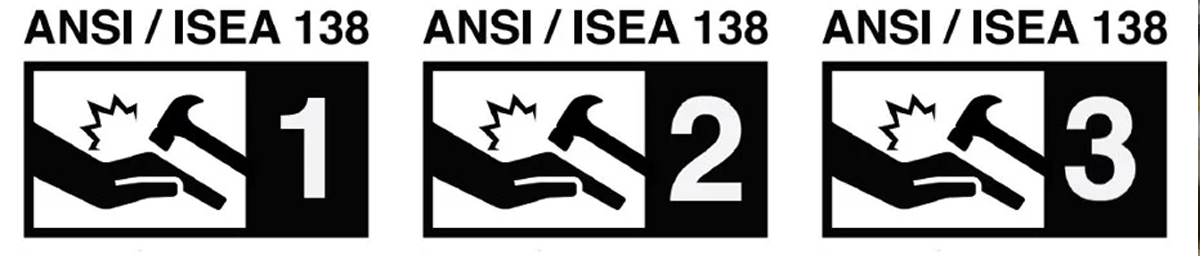
Standard ANSI/ISEA 138-2019 Impact Resistance Level Markings
Pros and Cons of Increasing Impact Resistance
| Pros | Cons |
| Enhanced Protection: Higher ratings mean better defense against severe injuries, reducing the likelihood of fractures and crushed bones. | Reduced Dexterity: More padding and heavier materials can make it difficult to perform intricate tasks. |
| Injury Reduction: Investing in higher-rated gloves for high-risk jobs can lead to a significant decrease in hand injuries and associated costs like medical bills and lost productivity. | Bulk & Comfort: Thicker gloves can be bulky, uncomfortable, and cause hand fatigue over long periods, which may tempt workers to remove them. |
| Peace of Mind: Knowing they have the right protection can boost worker confidence, allowing them to focus on the task at hand. | Higher Cost: Gloves with higher impact ratings are generally more expensive due to advanced materials like Thermoplastic Rubber (TPR). |
Always err on the side of caution. If there's uncertainty, choose a higher level of protection.
A solid understanding of impact resistance ratings is essential for ensuring workplace safety. By understanding ANSI/ISEA 138-2019 standards and conducting a thorough assessment of your unique hazards, you can select gloves that deliver the right protection for your team. Ultimately, the most effective glove is the one employees will wear—so give priority to fit, comfort, and comprehensive protection to safeguard your most important assets and keep productivity high.

Hand Safety:
Finding the Perfect Fit and Function in Industrial Gloves
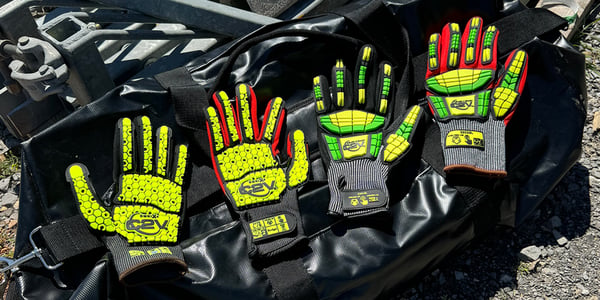
Your hands are your most valuable tools in the industrial world, and protecting them is paramount to maintaining safety and productivity. Selecting the right glove isn't just about grabbing the nearest pair; it's a critical safety decision that requires a careful analysis of the hazards, the work environment, and the need for fit and function. When hand injuries account for a significant percentage of workplace incidents, getting this choice right is a fundamental part of an effective safety program.
The Regulatory Framework for Hand Protection
Before selecting a glove, it's essential to understand the governing standards. The Occupational Safety and Health Administration (OSHA) mandates in 29 CFR 1910.138 that employers must select and require employees to use appropriate hand protection when hands are exposed to hazards. Specifically, the selection must be based on an evaluation of the glove’s performance characteristics relative to the task, conditions, duration of use, and identified hazards.
While OSHA sets the requirements, the American National Standards Institute (ANSI), in partnership with the International Safety Equipment Association (ANSI/ISEA 105), provides the classification system for measuring glove performance. This voluntary-yet-essential standard tests and rates gloves against:
- Mechanical Hazards: Cut, puncture, and abrasion resistance.
- Chemical Hazards: Permeation and degradation resistance.
- Thermal Hazards: Heat, ignition, and cold resistance.
Checking a glove's ANSI/ISEA 105 rating ensures you're selecting equipment that has been tested to provide the appropriate level of protection for the specific hazards your workers face.
Step 1: Analyze the Hazards and Environment
Proper glove selection begins with a thorough hazard assessment of the worker's task and location. The ideal glove for a construction site will differ dramatically from one for a forge or a chemical lab.
What are Your Workers Handling?
- Sharp Objects (Metal Sheets, Glass): Require gloves with high cut and puncture resistance, often featuring materials like engineered fibers or metal mesh. Check the ANSI/ISEA 105 cut level (A1-A9) for appropriate protection—the higher the number, the greater the resistance.
- Chemicals: Selection must be based on the specific substance and its Safety Data Sheet (SDS). A glove's Chemical Resistance—its ability to prevent permeation and degradation—is critical. For example, Butyl rubber is often used for highly corrosive acids, while Nitrile offers good general resistance to oils and many solvents.
- Small Nuts and Bolts / Power Tools: These tasks introduce two competing needs: protection and dexterity. Gloves must protect against cuts, abrasion, and Vibration Resistance from tools like grinders and sanders, while still being thin and flexible enough to handle small parts.
- Oils or Liquids: A coating that provides high Oil Resistance is essential to prevent tool slippage, which can lead to dropped object accidents or over-extension injuries. Foamed or sponge nitrile coatings offer superior grip in wet or oily conditions by drawing liquid away from the surface.
Where are They Working?
- Forge / High Heat Environments: Require gloves with high Heat Resistance to protect against radiant heat, molten metals, or hot steam. Specialized leather or aluminized gloves are often necessary to deflect heat.
- Outdoor or Cold Environments: Demand gloves with good Cold Resistance to prevent numbness, loss of grip, and frostbite. This is especially important for outdoor construction or winter work, and may require insulated gloves.
- Wet/High Humidity Areas (Coastal, Rainy): Gloves with excellent Water Resistance and a robust coating are necessary. This protects the hand and extends the service life of the glove by preventing material breakdown.
What High-Energy Substances are Present?
- High Voltage: Voltage Resistance is non-negotiable for electrical work. Insulating rubber gloves (OSHA 1910.137 compliance is mandatory) are used to prevent electrical shock. These specialized gloves are graded by voltage class and must be regularly inspected and tested.
- Molten Metals or Hot Steam: Require heat and flame-resistant gloves, typically leather or specialized synthetic fibers, that offer high thermal protection for both conductive and radiant heat exposure.
Step 2: Optimizing for Function with Dexterity
The best glove for the job is the one your worker will actually wear and use safely. A bulky glove that offers maximum protection but compromises a worker’s ability to manipulate small objects or maintain a secure grip is a liability. This is where dexterity—the ease of movement and fine motor control—becomes a key consideration.
The Role of Glove Gauge
The single most important factor in a glove's dexterity is the Glove Gauge, which measures the number of stitches or knits per inch.
| Glove Gauge | Description | Dexterity/Application |
| 7-10 Gauge | Lower knit count, thicker threads. | Low dexterity, high durability, general handling. |
| 13-18 Gauge | Higher knit count, thinner threads. | High dexterity, ideal for assembly, small parts handling, precision work. |
The higher the gauge, the thinner and more flexible the material, resulting in better hand mobility and grip. By combining a high gauge with engineered fabrics (such as advanced synthetic fibers), manufacturers now produce gloves that offer top-tier cut, abrasion, and puncture resistance without compromising dexterity. This combination provides the best all-around injury prevention for general labor and assembly tasks.
Conclusion: Safety by Design
Selecting the appropriate industrial glove demands a holistic view of the worksite. You must evaluate the potential physical, chemical, electrical, and thermal hazards to ensure the glove meets regulatory and performance standards. By focusing equally on maximum protection and optimal dexterity, you can provide workers with hand protection that is not only compliant with OSHA and ANSI/ISEA 105 but is also comfortable and functional enough to be worn consistently and correctly. Choosing the right fit and function is the key to minimizing risk and maximizing safety.

Hand Protection That Doesn't Break the Bank:
Choosing Cost-Effective Industrial Gloves
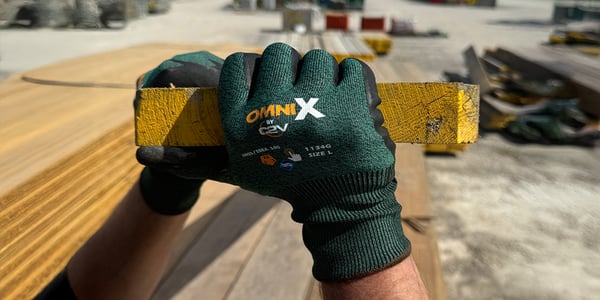
Selecting the right industrial glove involves a crucial balancing act: weighing protection and ease of use against cost value. It's a common mistake to assume that the most expensive gloves with the highest safety ratings are always the best choice. Similarly, simply defaulting to the cheapest option can lead to unintended, and costly, consequences.
True cost-effectiveness in hand protection is about making smart choices that reduce risks and extend the life of your gear. Here's how to ensure you're not spending more for the wrong gloves:
The Pitfalls of Overspending and Underspending
It's tempting to opt for the highest safety ratings, but an overly thick, highly-rated glove may restrict dexterity and prove less effective if a lower rating is all that's truly needed for the task. This can cause user frustration.
On the flip side, chasing the absolute lowest price is a gamble. Cheap glove manufacturers have been known to falsify protection ratings, claiming certified ANSI level protection without proper third-party testing. Choosing unverified gloves can lead to a false sense of security, putting workers at risk and potentially leading to higher costs from incidents.
Furthermore, a significant amount of money is wasted when gloves are simply thrown away or left unused because they get dirty or workers haven't been properly trained. These pitfalls lead to a loss in protection and unintended costs.
Key Strategies for Cost-Effective Glove Selection
Proper hand protection doesn’t always mean getting the most expensive gloves. Here are seven ways to achieve better protection and better cost value:
1. Get Certified ANSI Rated Gloves
Always confirm that your gloves are third-party rated for the correct ANSI level protection. Don't take a manufacturer's word for it; ask for their test documents. This ensures you're paying for verified protection, not just a claim.
2. Get Certifiably Durable Gloves
Longevity is a key factor in cost savings. Look for gloves with high abrasion resistance, which will last longer in manual labor, gripping, and power tool applications. Likewise, good water and oil resistance can significantly extend glove life when exposed to those elements.
3. Get Gloves That Can Be Cleaned or Laundered
Most gloves are thrown away because they're dirty, not because they're damaged. Implementing a simple process, like having workers rinse off gloves at the end of the day and leaving them to dry, can dramatically extend their useful life and reduce replacement costs.
4. Replace Older Styles with Certified Protective Gloves
Thicker doesn't always mean safer. Replacing older, bulky glove styles with thinner, more dexterous dipped gloves can offer the same or even better resistance against hazards while providing better dexterity and ease of use. This encourages workers to actually wear the hand protection, which is the ultimate goal.
5. Find Gloves That Workers Will Want to Wear
Forcing workers to wear an excessively thick or less dexterous glove (e.g., a Cut Level A5 glove for a simple Cut Level A3 task) will cause them to take them off often. This not only increases the risk of accidents but also means the glove you bought isn't being used effectively. Select gloves that offer the minimum required protection with maximum comfort and dexterity.
6. Train Workers on Proper Glove Use
Don't assume workers know which glove to grab. You're unlikely to find a "one-size-fits-all" glove for everyone or every task. Training is essential to ensure workers know which glove provides the correct type of resistance, amount of protection, and dexterity for the job, preventing misuse and early disposal.
7. Don't Always Pick Based on Brand
If cost is a major concern, be open to alternative brands. As long as the manufacturer provides third-party documentation for their ANSI certified ratings, you may find a less expensive, yet equally protective, option that delivers better overall value than a well-known name brand.




