KEEPING READINGS ACCURATE
The Problem: Gas detectors are vital for industrial safety, but they are susceptible to sensor drift (a gradual, subtle change in a sensor's electrical output and accuracy over time) and degradation (a more pronounced decline, often leading to complete failure).
The Culprits: This decline is accelerated by:
Harsh Environmental Conditions: Extreme temperatures, fluctuating humidity, and corrosive agents.
Exposure to High Gas Concentrations: Prolonged or repeated exposure can overwhelm or chemically alter the sensing element.
Sensor Poisoning: Certain substances like silicones, chlorinated hydrocarbons, heavy metals, or even cleaning agents can permanently damage the sensor.
Mechanical Stress: Physical shocks or constant vibrations.
The Peril: Inaccurate readings can lead to serious safety lapses, including false alarms (causing downtime and complacency) or, most critically, missed alarms (personnel unknowingly exposed to hazards).
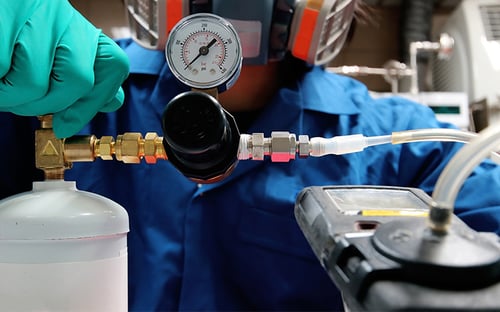
The Solution: Regular Calibration: The most effective defense is regular calibration, the process of adjusting a sensor’s output to match a known concentration of certified span gas, essentially "resetting" its accuracy.
Key Aspects: An effective program requires determining the right frequency (based on the environment and manufacturer's recommendations), using certified calibration gas, employing trained personnel, and maintaining meticulous documentation.
Bump Tests: Regular "bump tests" are also recommended as a quick check to confirm the sensor responds to gas between full calibrations.
Holistic Approach: A comprehensive strategy also includes proper sensor selection for the specific environment, routine maintenance and cleaning, environmental control, and establishing a proactive sensor replacement schedule rather than waiting for failure.


CALIBRATE WITH CONFIDENCE
Understanding the causes of calibration errors and implementing best practices are essential steps in maintaining a safe environment.
Common Causes of Calibration Failure
A gas monitor's calibration confirms that the sensor is accurately measuring gas concentrations. If the monitor rejects the calibration, it’s a critical sign that something is wrong. Here are the most common culprits:
1. Expired or Incorrect Calibration Gas
Calibration gas provides the known standard against which the monitor's sensors are adjusted.
Expired Gas: Over time, the concentration of gas in the cylinder can degrade or become unstable, especially for reactive gases like H2S (hydrogen sulfide) or CL2 (chlorine). Using an expired gas mixture means calibrating the monitor against a false standard, leading to inaccurate readings.
Incorrect Gas: Using the wrong gas concentration (e.g., 50 ppm CO when the monitor expects 100 ppm) or the wrong gas type entirely will result in a failed calibration. Always match the gas type and concentration to the monitor's specifications.
2. Sensor Lifespan and Degradation
Gas sensors, particularly electrochemical sensors used for toxic gases and catalytic bead sensors for combustible gases, have a finite operational life.
End-of-Life: Sensors nearing the end of their lifespan will often become less responsive, drift excessively, or fail to hold a calibration. They simply can no longer reliably detect or measure the target gas.
Poisoning or Inhibition: Certain substances, such as silicone vapors, heavy hydrocarbons, or high concentrations of H2S, can "poison" or inhibit the sensor's active material, leading to permanent damage and calibration failure.
3. Environmental Factors
The environment in which calibration is performed can significantly impact the process.
Temperature and Humidity: Gas monitors are typically calibrated at a specific temperature and humidity range. Extreme deviations (e.g., calibrating in a very cold or humid environment) can affect the sensor's electronic response, causing the calibration to fail. Always allow monitors to acclimatize to the calibration environment.
Pressure: While less common, significant changes in atmospheric pressure can influence some sensor types, requiring adjustment or compensation during calibration.
Best Practices and Solutions
Preventing calibration errors requires a proactive, systematic approach embedded in a robust maintenance program.
| Cause | Best Practice / Solution |
| Expired/Incorrect Gas | Check Expiration Dates: Visually inspect all calibration gas cylinders and discard any that are past their expiration date. Verify Specifications: Always match the cylinder's gas type and concentration to the monitor's required values. Store cylinders correctly to avoid degradation. |
| Sensor Degradation | Monitor Sensor Health: Most modern monitors provide a sensor life indication. Follow the manufacturer's recommended replacement schedule (e.g., every 2-3 years) even if the sensor appears operational. Replace any sensor that repeatedly fails calibration. |
| Environmental Factors | Acclimatization: Calibrate monitors in an environment that is within the monitor's specified operational range for temperature and humidity. Allow stabilization before calibration, especially when moving a monitor from a cold outdoors to a warm indoor area. |
| General Failure | Use Factory Equipment: Utilize the manufacturer's recommended flow regulators and tubing, as incorrect flow rates can prevent proper sensor exposure. Bump Test Regularly: Perform a quick "bump test" (exposure to gas without full adjustment) before each use to verify the monitor alarms and the sensor responds. |

Gas detection systems are essential guardians in industrial settings, protecting people and assets from invisible hazards. However, a common and vexing issue known as cross-sensitivity can undermine their reliability, leading to frequent false alarms and a dangerous complacency known as 'alarm fatigue'. Understanding this phenomenon is the first step toward maintaining system integrity and workplace safety.
What is Gas Detector Cross-Sensitivity?
Cross-sensitivity occurs when a gas detector reacts to a non-target gas because the interfering gas possesses a similar chemical or physical property to the one the sensor is designed to detect.
The Mimicry: Most common industrial gas sensors, particularly electrochemical and catalytic types, function by initiating a chemical reaction or physical change in the presence of the target gas. Cross-sensitivity happens when the interfering gas mimics this reaction or change. The sensor reads this 'mimic' signal and reports it as the target gas concentration, often triggering an alarm.
This isn't a sensor malfunction; it's a limitation based on the underlying detection technology. For instance, a sensor designed to oxidize a specific molecule may also oxidize a different, structurally similar molecule, resulting in an incorrect reading.
The Peril of Alarm Fatigue
False alarms aren't just an inconvenience—they pose a significant safety risk by introducing alarm fatigue.
Common Examples of Cross-Sensitivity
Cross-sensitivity is a practical concern across various detection technologies. Here are a couple of notable examples:
Mitigating Cross-Sensitivity and Restoring System Integrity
Fortunately, manufacturers and safety engineers have developed effective strategies to minimize false alarms without compromising detection capabilities.
1. Consult the Manufacturer’s Cross-Sensitivity Chart
This is arguably the single most important step. Every reputable gas detector manufacturer provides a cross-sensitivity chart or table for each sensor type.
How to Read It: The chart lists various common interfering gases and provides a correction factor or a percentage sensitivity relative to the target gas.
Example: If a CO sensor chart shows a 50% sensitivity to H₂, it means a concentration of 100 ppm of H₂ will cause the sensor to read an equivalent of 50 ppm of CO.
Actionable Data: By comparing the chart data with the known background gases in your environment, you can understand the potential for false alarms and adjust alarm thresholds or select a more appropriate sensor technology.
2. Utilize Selective Filters and Compensated Sensors
The most effective modern solution is the use of specialized chemical filters integrated directly into the sensor head.
3. Implement Sensor Diversity
In areas with complex gas mixtures, consider using different detection technologies that have complementary strengths and weaknesses.


Imagine entering a confined space. You check your LEL (Lower Explosive Limit) monitor. It reads 0%. You assume the air is clean, but you are actually standing in a cloud of combustible gas. Your sensor hasn't failed by turning off; it has failed by staying "alive" but losing its ability to "smell."
This is the result of sensor poisoning and inhibition—the most dangerous failure modes in gas detection because they generate false negatives.
Poisoning vs. Inhibition: What’s the Difference?
Sensor Poisoning (Permanent Damage):
Poisoning occurs when a foreign substance chemically bonds to the sensor’s active surface (usually the catalyst). This forms a permanent barrier or alters the chemical structure, rendering the sensor dead. No amount of fresh air will fix it. The sensor is physically ruined and requires immediate replacement.
Sensor Inhibition (Temporary/Reversible):
Inhibition is a temporary loss of sensitivity. Certain chemicals can absorb onto the sensor surface without permanently bonding. If the sensor is moved to fresh air or exposed to a specific calibration gas, the inhibitor may "burn off" or desorb, restoring sensitivity. However, repeated inhibition can eventually lead to permanent poisoning.
The "Silent Killer": Why This Failure is Unique
Most electronic failures are fail-safe; if a battery dies or a circuit breaks, the screen goes blank or an error code flashes.
Poisoning is different. A poisoned sensor effectively goes "blind." It is still powered on, the display is crisp, and it reads "0 PPM" or "0% LEL." It gives the user a false sense of security in a hazardous environment. The only way to detect a poisoned sensor is to challenge it with gas (bump test).
The Usual Suspects: Chemical Culprits
Different sensors have different weaknesses. Knowing what chemicals are in your facility is the first step in prevention.
1. Catalytic Bead Sensors (LEL)
These are the standard for detecting combustible gases (like Methane, Propane). They rely on a heated bead coated in a catalyst to burn small amounts of gas. They are extremely susceptible to poisoning.
The Worst Offenders (Poisons):
Silicones: Found in lubricants, sealants, hair care products, and cleaning polishes. Even a few ppm of silicone vapor can coat the bead in a glassy layer within minutes, permanently killing it.
Lead compounds: Often found in tetraethyl lead (older fuels).
Sulfur compounds: Such as Hydrogen Sulfide (H2S).
Phosphates: Found in some esters and hydraulic fluids.
Common Inhibitors:
Halogenated Hydrocarbons: Chemicals containing Chlorine, Fluorine, Bromine, or Iodine (often found in solvents, refrigerants, and fire extinguishing agents). These can temporarily desensitize the bead.
2. Electrochemical Sensors
Used for toxic gases (CO, H2S, O2, Cl2), these sensors rely on a chemical reaction within an electrolyte solution. While less prone to "coating" than catalytic beads, they can still be poisoned or "saturated."
The Culprits:
Solvents and Alcohols: High concentrations of Methanol, Ethanol, or Acetone can overwhelm the sensor's chemistry.
Glues and Adhesives: Off-gassing from curing glues can chemically alter the electrolyte.
Cross-Interference: While not poisoning per se, exposure to a non-target gas (like H2 is to a CO sensor) can sometimes drive the sensor into a negative drift or permanent loss of sensitivity.
Regulatory Standards and Best Practices
Because this failure is invisible, regulatory bodies are strict about verification.
OSHA & ISEA: The International Safety Equipment Association (ISEA) and OSHA guidelines emphasize that the only way to verify sensor performance is a daily Bump Test (checking the sensor with a known concentration of gas) before use.
IEC 60079-29-2: This international standard regarding gas detectors specifically highlights the risk of poisoning in catalytic sensors and mandates regular sensitivity checks.
Action Plan: If You Suspect Poisoning
While calibration is paramount, a comprehensive approach to combating sensor drift also includes:
Stop Work: If a worker smells gas (like rotten eggs/H2S) but the detector reads zero, evacuate immediately. Trust your nose over the device in that moment.
Bump Test Immediately: Do not just "zero" the device in fresh air. Apply calibration gas. If the sensor fails to reach the target value or responds sluggishly, it is likely compromised.
Replace, Don't Repair: A poisoned sensor cannot be cleaned. It must be replaced.
Install Filters: If you work in environments with known poisons (e.g., a painting booth with silicones), use specific filters (like charcoal filters) over the sensor inlet to scrub out the poisons while letting the target gas through.

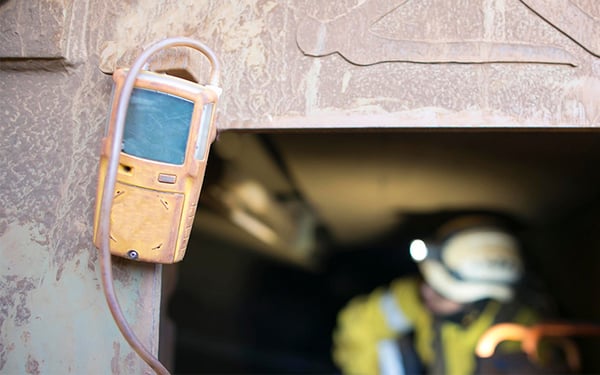
In the world of upstream oil rigs, refinery turnarounds, and heavy construction, "gentle" isn't in the vocabulary. Portable gas monitors are treated less like precision scientific instruments and more like hammers—dropped off scaffolding, stepped on in the mud, and occasionally submerged in a cocktail of "produced water" and oily sludge.
Manufacturers have responded by building "tanks." We see devices boasting IP67 or IP68 ratings, promising they can survive a dunk in a meter of water or a literal sandstorm. But there is a dirty little secret in the safety industry: An IP rating protects the electronics, but it doesn't guarantee the sensor can actually "see" the gas.
An Ingress Protection (IP) rating tells you that the internal circuitry is sealed against dust and water. While that's great for the longevity of the motherboard, it creates a false sense of security regarding the device's primary job: detecting gas.
The most critical part of the monitor—the sensor path—is also its most vulnerable. To work, gas must pass through a fine membrane or filter to reach the internal sensors.
The "Ghost Failure" Scenarios:
The Result: You have a perfectly functional, expensive paperweight clipped to your chest while you walk into a potentially lethal atmosphere.
Repair costs for "clogged" units add up faster than hardware failures. Because the unit looks pristine on the outside, technicians often skip deep inspections. It isn't until a Bump Test fails that the issue is discovered—or worse, it isn't discovered at all until an incident occurs.
Replacing proprietary sensor filters and membranes can cost a significant percentage of the device's total value, especially when factoring in the downtime of the fleet.
To keep your fleet truly operational (and not just "powered on"), consider these three layers of defense:
1. The Non-Negotiable Bump Test
The only way to verify that a filter isn't clogged is to challenge it with gas. If your team is only bump testing once a week to save on calibration gas, you are flying blind.
2. "Sacrificial" Protection
Think of your gas monitor like a smartphone. You wouldn't use it on a construction site without a screen protector.
3. Proactive Cleaning Procedures
Teach your crew that "waterproof" does not mean "power-washer proof."

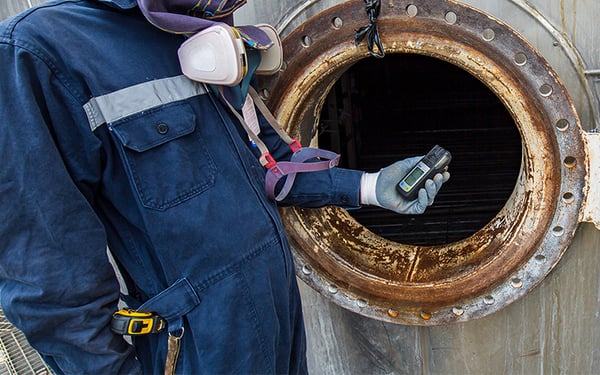
In the world of industrial maintenance, there is a common saying: "Industrial maintenance doesn't stop for the weather, but equipment sometimes does."
Whether you are performing a turnaround in the sub-zero wind chills of the North Slope or managing a refinery expansion in the 115°F (46°C) heat of the Permian Basin, your portable gas monitoring equipment is your most critical lifeline. However, these devices—packed with sensitive electrochemical sensors, lithium-ion batteries, and liquid crystal displays—are not invincible.
When the mercury hits the extremes, the hardware often hits the wall. Here is a look at the "hidden" failures of environmental extremes on gas monitors and how to keep your fleet in the fight.
When temperatures drop below -20°C (-4°F), the laws of chemistry and physics begin to work against your gear.
High-heat environments (above 40°C / 104°F) present a different, often more permanent, set of problems.
Maintenance Focus: If a battery feels warm to the touch before use or if the device casing appears slightly "bowed," the battery has likely begun to swell. Stop use immediately. A swollen battery is a fire hazard and a sign of internal chemical distress.
Maintaining equipment in extreme weather isn't just a "good idea"—it’s a regulatory requirement.
To ensure your equipment remains as resilient as your crew, implement these mitigation strategies:
Beyond hardware tweaks, your SOPs (Standard Operating Procedures) should adapt to the weather:
Industry consensus standards, such as those published by the International Organization for Standardization (ISO) or American National Standards Institute (ANSI), often reinforce the need for periodic sensor verification (bump testing) and full instrument calibration to maintain safety certification.
In essence, any standard requiring the use of gas detection instruments implicitly requires that those instruments are accurately calibrated to protect workers from exposure to hazardous atmospheres.


goSafe's Blog Articles on this topic
Copyright © 2026 - All Rights Reserved - gosafe.com