In the world of industrial safety, those three characters are often treated as a "pass/fail" grade. If it says Z87, you’re good to go, right? Not exactly.
While that mark confirms the eyewear meets the base safety standards set by the American National Standards Institute (ANSI), the letters and symbols that follow it are what actually determine if you’re protected from a flying metal shard or just a stray splash of cleaning fluid.

It’s time to stop treating your safety gear like a "one size fits all" solution. Let’s decode the 2020 update to the ANSI/ISEA Z87.1 standard so you can ensure your eyewear actually matches your environment.
The most critical distinction in the Z87.1-2020 standard is how the eyewear handles a hit. If your job involves grinding, chipping, or power tools, the "+" is your best friend.
If you work in a chemical plant or a woodworking shop, impact isn't your only enemy. The 2020 standard uses "D" markings to identify eyewear designed for specific environmental hazards.
| Marking | Hazard Protection | Design Requirement |
| D3 | Splash & Droplet | Tight seal around the eyes; tested with liquid spray |
| D4 | Dust | Protects against large airborne particles |
| D5 | Fine Dust | Protects against particles smaller than 5 microns |
Pro-Tip: If you see a "D3" mark, those glasses or goggles are chemically resistant. If you’re working with hazardous liquids and your glasses don’t have a D3, you’re essentially wearing a screen door against a rainstorm.
The 2020 revision wasn't just a "copy-paste" of the 2015 version. It placed a heavier emphasis on Anti-Fog (Marked with an "X") and Relaxed Optics.
In the modern manufacturing environment, fogging is one of the leading reasons workers remove their safety glasses - usually at exactly the wrong time.
Anti-fog safety eyewear undergoes rigorous testing, primarily under European standard DIN EN 168, which requires lenses to remain fog-free for at least 8 seconds in a controlled, warm, and humid environment, often marked with an "N" - meaning the lens has passed the mandatory anti-fog tests, or "X" - often used in conjunction with premium coatings like Bolle's 'Platinum®' coating to indicate superior, long-lasting anti-fog properties that often exceed standard requirements.
If your lenses are treated with a permanent anti-fog coating that meets the new rigorous testing, you’ll see the "X" mark.
Before you start your next shift, perform this quick audit on your eyewear:
Safety eyewear is a piece of technology, not just a piece of plastic. By knowing how to read the markings, you aren’t just following a mandate - you’re ensuring you go home with the same number of eyes you started with.

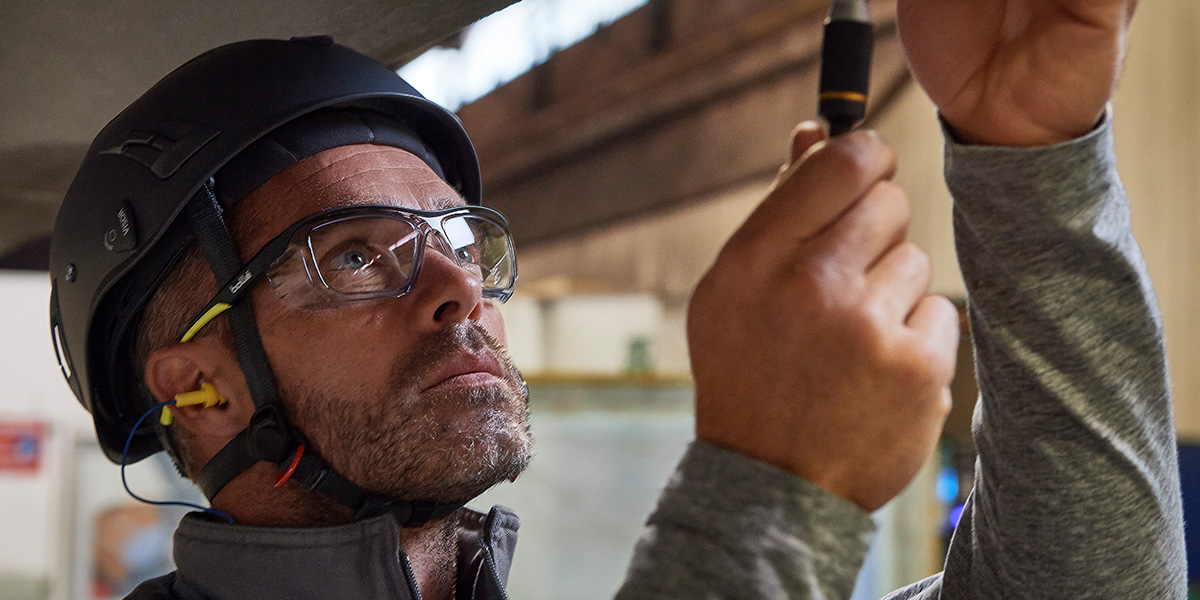
We’ve all seen it: a seasoned pipefitter or an apprentice walking onto the floor sporting their trendy designer frames with a pair of flimsy, yellowing plastic "wings" slid onto the temples.
To the employee, it’s a compromise. To the safety manager, it’s a migraine in the making. While slide-on side shields feel like a "good enough" solution, "good enough" rarely holds up when a metal shard is traveling at 150 feet per second.

Let’s cut to the chase: OSHA isn't a fan of your "DIY" safety setup. According to OSHA 1910.133(a)(3), if an employee wears prescription lenses, their eye protection must meet one of two criteria:
The catch? Most "street" glasses are not ANSI Z87.1 certified. Even with side shields, the frames and lenses themselves often lack the structural integrity to keep a lens from shattering inward upon impact. If the frame fails, the shield is useless.
When it comes to compliance, you generally have two paths. Here is how they stack up:
| Feature | Over-the-Glass (OTG) | Integrated Rx Safety Glasses |
| Initial Cost | Low | High |
| Optical Clarity | Prone to "Double Vision" | Crystal clear |
| Comfort | Heavy; pressure on ears/nose | Lightweight; customized fit |
| Compliance | Easy to spot-check | Requires verification of Z87 + stamp |
| Longevity | High replacement rate (scratches) | Durable; long-term investment |
OTGs are the standard "quick fix." They’re affordable and they get a visitor onto the floor in seconds. But for an eight-hour shift? They present a few major hurdles:
Investing in integrated prescription safety glasses isn't just a "perk" for employees; it's a risk management strategy.
1. Better Peripheral Vision
Integrated frames are designed to wrap or provide wide - angle protection without the bulk of a secondary frame blocking the line of sight.
2. Increased Compliance
When PPE is comfortable, people wear it. When it’s a clunky hindrance, they look for excuses to "forget" it. Integrated Rx glasses feel like regular eyewear, which drastically reduces non-compliance rates.
3. Long-Term Cost Savings
While the upfront cost of a pair of Rx safety glasses is higher (often $100 - $250), they are built to industrial standards. You’ll spend less on replacing scratched-up, cheap OTGs and lose less productivity to workers struggling with vision fatigue.
Slide-on shields are a temporary fix for a permanent safety requirement. If you want a workforce that is focused on the task rather than their fogging, slipping eyewear, it’s time to move toward an integrated Rx program.
Safety is a culture, and nothing says "we value your precision" like giving your team the ability to see clearly and safely.

It’s 95 degrees with 80% humidity. Your clothes feel like a hot, wet blanket. Or maybe you're working in a refrigerated environment with those same conditions outdoors; or - you're stuck working in freezing temperatures and frequently have to enter and exit that heated office building.
Regardless; you’re on a job site, mid-task, and suddenly the world turns into a blurry, grey smudge. Your safety glasses have turned into two steam-filled windows.

What’s the first thing you do? You pull them off.
That split second - the moment you remove your eye protection to wipe them off - is when the most preventable injuries happen. In fact, fogging is the #1 reason workers remove their eyewear in high-humidity manufacturing or construction environments. While almost every pair of safety glasses on the market claims to be "anti-fog," the reality on the ground (and on your face) tells a different story.
Fogging occurs when warm, moist air (from your sweat or the environment) hits a cooler surface (your lenses). The moisture condenses into tiny droplets. These droplets scatter light, creating that opaque "fog" effect.
To fight this, manufacturers generally use two different schools of thought:
Until recently, "anti-fog" was a marketing term with very little oversight. However, the ANSI/ISEA Z87.1-2020 standard introduced a specific optional criteria to help safety managers separate the wheat from the chaff.
If you see an "X" mark on the lens or frame, it means the eyewear has passed a rigorous anti-fog test.
The Test: Lenses are placed over a container of heated water to simulate extreme humidity. To earn the "X" rating, the lens must remain completely fog-free for at least 8 seconds.
While 8 seconds might sound short, in the world of high-heat transitions, it is the difference between completing a weld and having to stop your machine because you’re working blind.
This is where the marketing fluff usually gets thick. Not all anti-fog treatments are created equal.
1. Topical Coatings
Most entry-level safety glasses use a topical spray or dip. This is essentially a soap-like layer applied to the surface of the lens.
2. Permanently Bonded Technology
High-performance eyewear utilizes a bonded coating. This isn't just a layer sitting on top; it’s chemically integrated into the lens material during the manufacturing process.
| Feature | Topical/Dipped Coatings | Bonded Anti-Fog Tech |
| Durability | Wears off after few cleanings | Lasts the life of the eyewear |
| Performance | Fails in high-intensity steam | Withstands extreme transitions |
| Cost | Low initial cost | Higher initial cost; lower TCO* |
| Best For | Casual, dry environments | Heavy industry, HVAC, Construction, Food Service, Refrigeration, Cold-Weather roles |
*Total Cost of Ownership (TCO) is lower because you replace the glasses less frequently
When a worker's vision is compromised, they face a "Catch-22": stay protected but stay blind, or see clearly but risk an eye injury. By investing in ANSI "X" rated, bonded anti-fog technology, you remove that choice.
True safety isn't just about providing a plastic shield; it's about providing a shield that a worker never feels the need to take off. Don't let your safety program get lost in the fog of cheap marketing—look for the "X" and demand bonded durability.
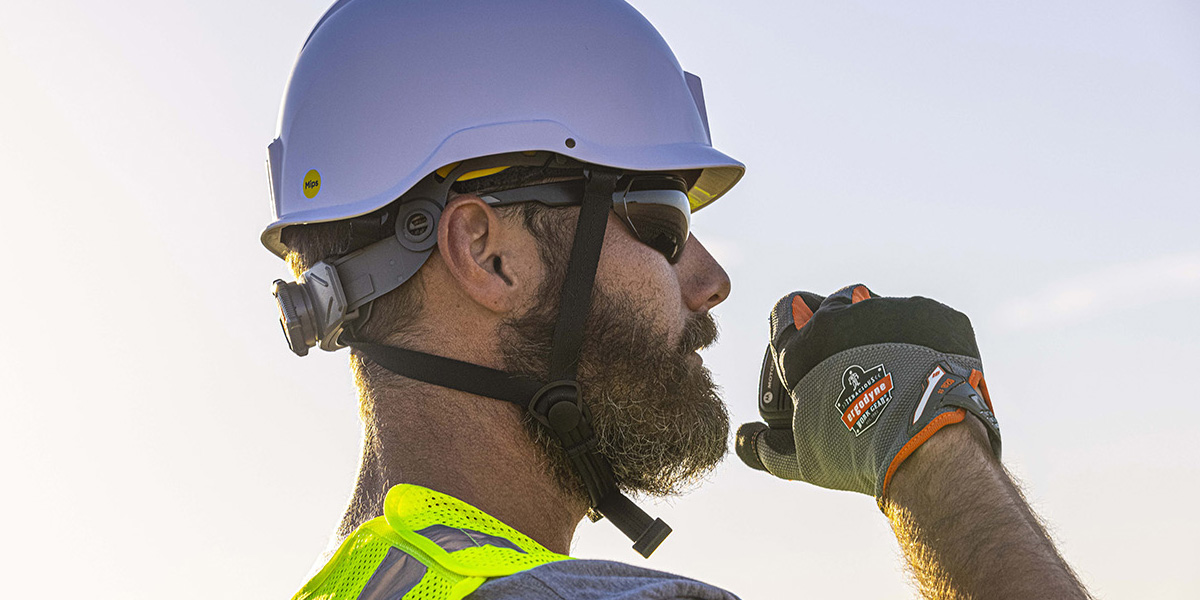
We’ve all seen it: that one worker wearing dark-as-night shades inside a dimly lit warehouse, looking like they’re ready for a music video but actually walking straight into a forklift path. On the flip side, squinting against the brutal glare of a concrete pour or a rooftop install isn't just uncomfortable-it's dangerous.
In the world of industrial safety, lens tinting isn't a fashion statement; it's a tool. Choosing the wrong tint is like using a flathead screwdriver for a Phillips head screw - it might sort of work, but you’re asking for trouble.

Before we dive into colors, we have to talk about Visible Light Transmission (VLT).
Simply put, VLT is the percentage of light that passes through your lens to reach your eyes.
The goal isn't to make things dark; it’s to achieve the "Goldilocks" zone of VLT for your specific environment so your pupils don't have to work overtime.
If your job requires you to move constantly between a bright loading dock and a shaded warehouse, you know the "blind moment" that happens when you step inside. Indoor/Outdoor (I/O) lenses are the solution.
These aren't quite clear, but they aren't sunglasses either. They usually feature a light metallic "mirror" coating on a clear or slightly tinted base.
*It is worth noting here that Transition®-style lenses (photochromic lenses that transition from light to dark or vice-versa) are also an option, but that the time required for the transition from one shade to the other can be from 10 seconds to one minute, depending on the manufacturer and type of lens. While convenient, for some this is less desirable than the specific convenience offered by I/O lenses.
Standard dark lenses just make things dimmer. Polarized lenses actually change the kind of light that reaches your eye.
Light bouncing off flat surfaces—like a wet road, a sheet of stainless steel, or a glass facade—travels in horizontal waves, creating that blinding "hot spot" we call glare. Polarized lenses contain a special vertical filter that acts like a microscopic Venetian blind, blocking those horizontal waves while letting vertical light through.
Ever wonder why shooters or pilots wear yellow? It’s not just a retro vibe. Amber and Yellow tints are designed to filter out blue light and "flat" light.
The industrial landscape is changing. Tablets, rugged laptops, and HMI (Human-Machine Interface) screens are now as common as wrenches. This introduces a new hazard: Digital Eye Strain.
Blue light filtering in safety eyewear is a rapidly growing trend. Unlike standard tints, these lenses are often nearly clear but treated to block the high-energy blue light emitted by screens.
Choosing the right lens is about assessing your environment and your light sources.
| Lens Tint | Best Environment | Key Benefit |
| Clear | General indoor use | Maximum visibility |
| Smoke Grey | Bright outdoor sun | Reduces glare/fatigue |
| Amber | Overcast/Low light | Enhances contrast |
| I/O Mirror | Transitioning in/out | Balanced light management |
| Blue Light | Screen-heavy tasks | Reduces digital strain |
| Polarized |
High-glare (Metal, Water, Snow) |
Eliminates blinding reflections |
| Copper | Variable outdoor light | Sharpens contrast; great for outdoor detail |
| Silver Mirror | Intense, direct sunlight | Reflects heat and maximum light |
| Mirror (General) | High-glare outdoors | Reduces VLT while reflecting glare away |
The bottom line? If you’re choosing your safety glasses based solely on how they look in the mirror, you’re missing half the protection. Pick the tint that helps you see the hazards before they see you.
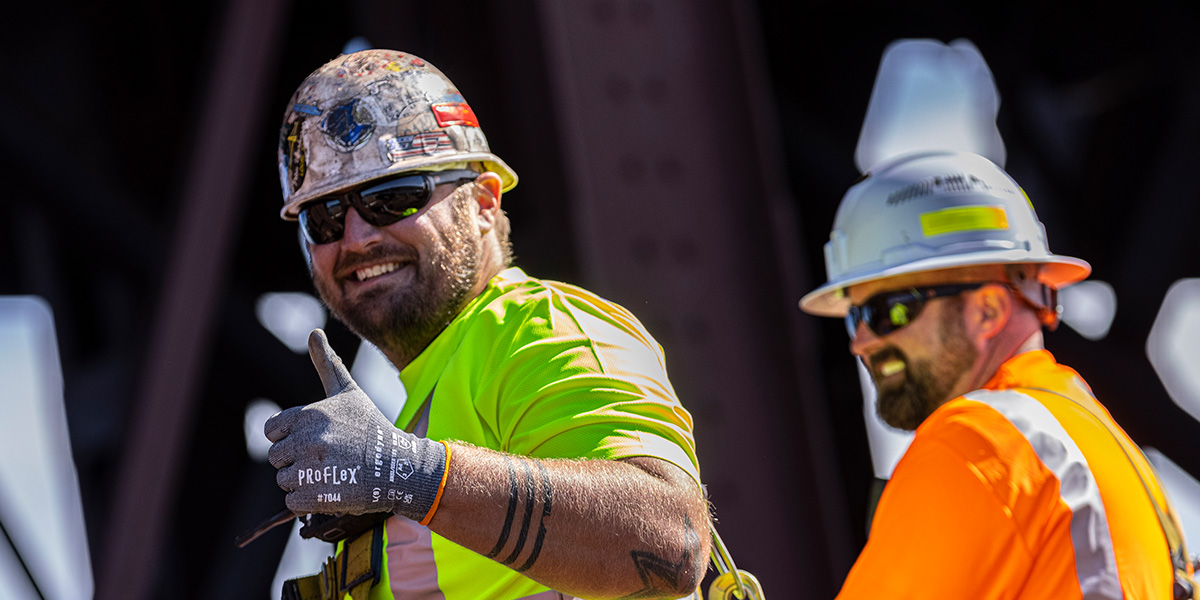
SAFETY EYEWEAR WORKERS WANT TO WEAR
You might think having protective glasses is enough, but if those glasses look terrible, workers will be less keen on using them constantly on the field. This may seem like just a matter of preference, but all these factors play a massive role in your safety culture.
When style meets fit and function, your workers begin using their safety glasses without you needing to hound them. Not only that, but it improves worker morale and gives them a level of agency and personal investment in their work, knowing you care about their opinions and thoughts.

We’ve all seen it: a pair of safety glasses perched precariously on a hard hat or tucked into a vest pocket while a grinder throws sparks just feet away.
In the world of industrial safety, the truth is simple but brutal: If safety eyewear is ugly or uncomfortable, it’s going to end up anywhere except over the eyes. For decades, compliance was treated as a mandate - a "wear it because we said so" requirement. But as the manufacturing landscape evolves, we are learning that the secret to a perfect safety record isn't more rules; it’s better design. We need to stop looking at Personal Protective Equipment (PPE) as a uniform and start looking at it as gear.
Humans are inherently psychological creatures. When we put on clothes that make us feel capable, professional, or even "cool," our performance and attitude shift. This is often called enclothed cognition.
If you hand a worker a pair of "shop goggles" that look like they belong in a 1950s chemistry lab, you’re fighting an uphill battle against their ego and comfort. However, when PPE mirrors the athletic-inspired designs of high-end sunglasses or sports gear, the psychological barrier to compliance diminishes. Workers aren't just wearing "protection"; they’re wearing "equipment."
Modern manufacturing has seen a massive shift toward wraparound styles. Beyond the obvious safety benefit of increased peripheral coverage and protection from side impacts, these designs offer a sleek, modern aesthetic. By eliminating the need for separate side shields, wraparound lenses provide a wide, unobstructed field of vision. This reduces the "tunnel vision" feeling that often leads workers to remove their glasses when performing precision tasks.
There is also heightened popularity with safety eyewear that resembles leisure sunglasses. These 4-Base styles might still be incorporating side shields due to their flatter lenses, but they aren't the bulky add-ons from years ago; today's styles incorporate them into the glasses themselves and still maintain full ANSI Z87.1+ protection.
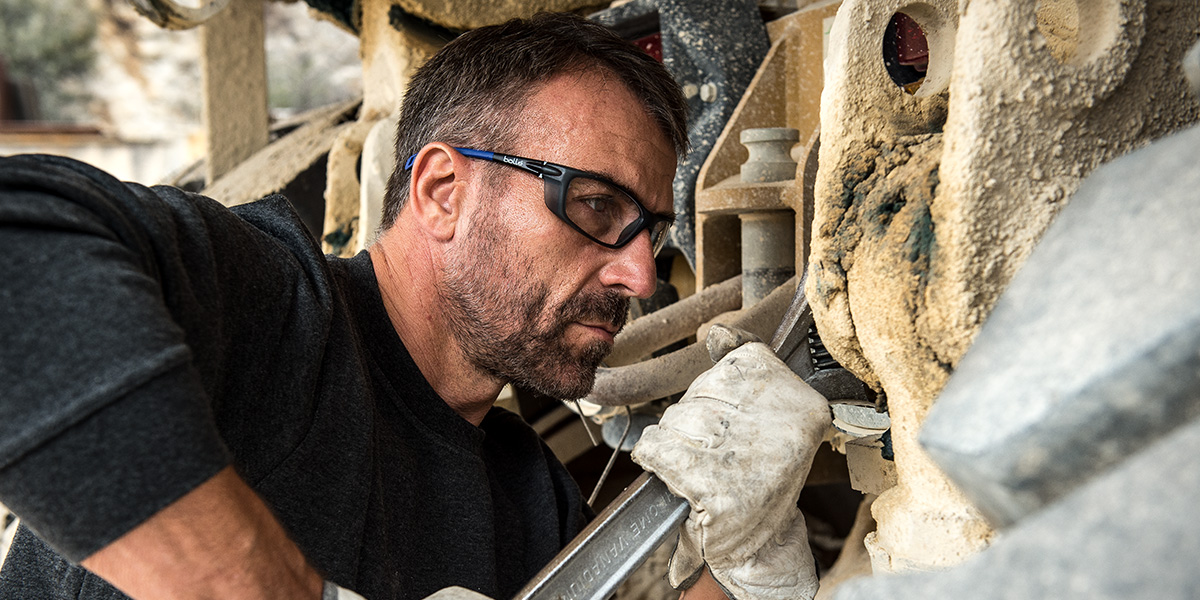
MAKING YOUR EYEWEAR LAST LONGER
How often do you find yourself buying more safety glasses for your workforce? If you think "too often," then you're probably right. But why?
Eyewear is not usually a form of PPE you'd think about maintaining, but general wear and tear take it's toll over the course of several months. Improper cleaning practices can rub off fog, scratch, or chemical resistant properties, and glasses may become harder to see through as blemishes accumulate.
Not to mention the cheapest glass is usually the least resilient. It may cost half as much as premium, but if you replace it 3 times more often, you're losing money.

It is a scenario played out thousands of times a day across manufacturing floors, construction sites, and oil rigs: a worker feels a smudge on their safety glasses, pulls up the hem of their cotton T-shirt, gives the lenses a quick rub, and goes back to work.
It seems harmless, but that single, instinctive gesture is a primary driver of industrial eye injuries.
A scratched lens isn’t just annoying; it’s a vision-impairing hazard that OSHA takes seriously. When safety eyewear becomes marred by micro-scratches, pits, and scuffs, it ceases to be a protective shield and becomes an active operational liability.
Here is a look at why lens damage compromises more than just visibility, how to recognize when eyewear has reached its true "end of life," and the exact protocols needed to keep your team safe and compliant.
Modern safety eyewear lenses are almost universally made from polycarbonate. This polymer is chosen for its incredible impact resistance - it can stop high-velocity flying fragments that would shatter standard glass or acrylic. However, polycarbonate has a natural vulnerability: it is inherently soft and susceptible to scratching.
To mitigate this, manufacturers apply specialized anti-scratch and anti-fog hardcoats. But these coatings are only a few microns thick. When subjected to improper cleaning or harsh environments, they rapidly degrade.
Wiping safety glasses with a shirt, a paper towel, or a shop rag is essentially like rubbing them with fine-grit sandpaper. Cotton fibers trap microscopic abrasive dust (silica, metallic shavings, or drywall dust) already present on the clothing or the lens. Dragging that dust across the lens surfaces carves microscopic trenches into the polycarbonate.
Not all scratches come from poor cleaning habits. Workers operating anywhere near grinding wheels, welding stations, or cutting torches face a distinct threat: micro-pitting.
When a grinding wheel contacts metal, it generates a stream of incandescent sparks. These sparks are actually white-hot molten metal fragments flying through the air. When they strike a polycarbonate lens, they don't just bounce off; they melt directly into the surface coating, cooling instantly and leaving behind tiny craters or "pits."
Micro-pitting does two dangerous things:
The Occupational Safety and Health Administration (OSHA) does not view scratched eyewear as a minor cosmetic issue.
Under OSHA 29 CFR 1910.133(a)(1), employers must ensure that each affected employee uses appropriate eye or face protection when exposed to eye hazards. More specifically, OSHA 1910.133(a)(2) mandates that personal protective equipment (PPE) must be maintained in a sanitary and reliable condition.
Furthermore, OSHA strictly enforces ANSI/ISEA Z87.1, the American National Standard for Occupational and Educational Personal Eye and Face Protection Devices. The ANSI Z87.1 standard explicitly dictates that eye protection must be free from structural defects, severe pitting, or scratches that obscure or distort vision.
If an OSHA inspector walks your facility and observes workers wearing heavily scuffed, pitted, or scratched safety glasses, your company can be cited for failing to maintain PPE in a safe, reliable, and compliant condition.
Safety glasses do not have a universal expiration date stamped on the frame, but industry best practices establish clear thresholds for when a pair has reached its absolute end of life.
Eyewear must be pulled from service immediately if it exhibits any of the following:
To extend the lifespan of your safety eyewear and protect your workforce's vision, implement a strict maintenance protocol across your facility.
When safety glasses aren't on a worker's face, they shouldn't be tossed into a toolbox, left sitting on a dashboard, or dropped into a pocket full of screws and keys.
Investing in high-quality ANSI Z87.1-compliant safety eyewear is only half the battle. If your workforce is cleaning their gear with their shirts and tossing them onto grease-covered workbenches, your safety program is losing money - and exposing workers to preventable vision risks.
By providing accessible lens cleaning stations, distributing microfiber pouches, and educating teams on the physical hazards of micro-pitting and scratches, you can protect both your employees' sight and your company's regulatory compliance. Remember: Clear vision is safe vision.
COMING SOON
REDUCE, RECYCLE, REPEAT
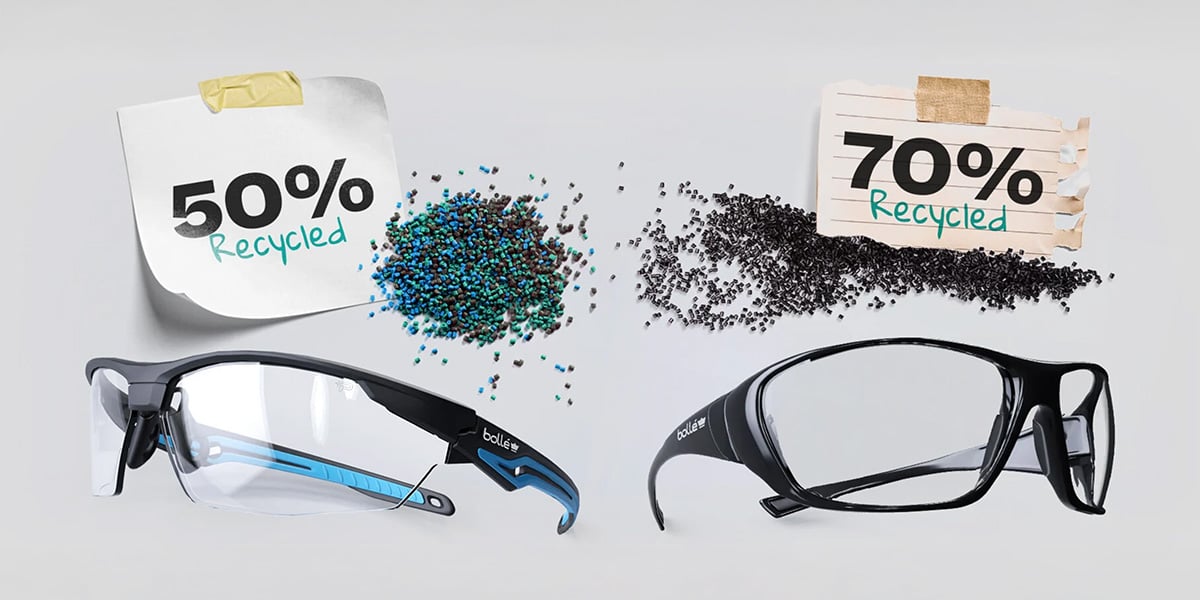
We've all probably heard about the massive island of plastic in the oceans, among other talking points: but the reality is this: there are many practical upsides to sustainable PPE sourcing.
Longer lasting eyewear means less frequent replacements, saving you time and money from dealing with extra waste. Eyewear made of recycled materials also reduces overall industrial waste which aids in conservation and humanitarian efforts.
No matter how you slice it, waste is waste. Why not reduce it?
Full article coming soon.
Copyright © 2026 - All Rights Reserved - gosafe.com