---
title: Head and Brain Injury Page
description: What is the difference between type 1 and type 2 hard hats? Type II safety helmets are the best protection against head injury from slips, trips, & falls.
---
[](https://www.gosafe.com)
- [View Cart ](https://www.gosafe.com/ecommerce/shoppingcart.aspx)
- [Order Status ](https://www.gosafe.com/ecommerce/CustomerOrderSearchDetail.aspx)
- [Sign In ](https://www.gosafe.com/ecommerce/customerloginform.aspx?RETURNURL=/ecommerce/customermyaccount.aspx)
All Categories General PPE Safety Clothing Equipment Management Facility & Worksite
Toggle navigation
- Safety Gear
- [General PPE](https://www.gosafe.com/ecommerce/category/general-ppe)
[High Value PPE](https://www.gosafe.com/ecommerce/category/general-ppe/high-value-ppe)
[Ergonomics](https://www.gosafe.com/ecommerce/category/general-ppe/ergonomics)
[Eyewear](https://www.gosafe.com/ecommerce/category/general-ppe/eyewear)
[Foot Protection](https://www.gosafe.com/ecommerce/category/general-ppe/foot-protection)
[Hand Protection](https://www.gosafe.com/ecommerce/category/general-ppe/hand-protection)
[Head & Face Protection](https://www.gosafe.com/ecommerce/category/general-ppe/head-face-protection)
[Hearing Protection](https://www.gosafe.com/ecommerce/category/general-ppe/hearing-protection)
[Seasonal PPE](https://www.gosafe.com/ecommerce/category/general-ppe/seasonal-ppe)
[Respiratory](https://www.gosafe.com/ecommerce/category/general-ppe/respiratory)
- [Safety Clothing](https://www.gosafe.com/ecommerce/category/safety-clothing)
[Arc Flash](https://www.gosafe.com/ecommerce/category/safety-clothing/arc-flash)
[Disposable Clothing](https://www.gosafe.com/ecommerce/category/safety-clothing/disposable-clothing)
[Flame Resistant Clothing](https://www.gosafe.com/ecommerce/category/safety-clothing/flame-resistant-clothing)
[High-Visibility Apparel](https://www.gosafe.com/ecommerce/category/safety-clothing/high-visibility-apparel)
[Rainwear](https://www.gosafe.com/ecommerce/category/safety-clothing/rainwear)
[Workwear](https://www.gosafe.com/ecommerce/category/safety-clothing/workwear)
- [Facility & Worksite](https://www.gosafe.com/ecommerce/category/facility-worksite)
[Facility](https://www.gosafe.com/ecommerce/category/facility-worksite/facility)
[Fall Protection](https://www.gosafe.com/ecommerce/category/facility-worksite/fall-protection)
[Fire Protection](https://www.gosafe.com/ecommerce/category/facility-worksite/fire-protection)
[First Aid & Medical](https://www.gosafe.com/ecommerce/category/facility-worksite/first-aid-medical)
[Instrumentation](https://www.gosafe.com/ecommerce/category/facility-worksite/instrumentation)
[Safety Signs](https://www.gosafe.com/ecommerce/category/facility-worksite/safety-signs)
[Spill Containment](https://www.gosafe.com/ecommerce/category/facility-worksite/spill-containment)
[Traffic Control](https://www.gosafe.com/ecommerce/category/facility-worksite/traffic-control)
- [Specialty Items](https://www.gosafe.com/ecommerce/category/specialty-items)
[Made In USA](https://www.gosafe.com/ecommerce/category/specialty-items/made-in-usa)
[Bags, Belts, Buckets, & Cases](https://www.gosafe.com/ecommerce/category/specialty-items/bags-belts-buckets-cases)
[Current Promotions](https://www.gosafe.com/ecommerce/category/specialty-items/current-promotions)
[Safety Storage & Cabinets](https://www.gosafe.com/ecommerce/category/specialty-items/safety-storage-cabinets)
[Security & Lockout](https://www.gosafe.com/ecommerce/category/specialty-items/security-lockout)
[Tools](https://www.gosafe.com/ecommerce/category/specialty-items/tools)
[Pandemic Preparedness](https://www.gosafe.com/ecommerce/category/specialty-items/pandemic-preparedness)
- Resources
- - [Literature](https://offers.gosafe.com/gosafeliterature?hsLang=en)
- [Safety Blog](https://blog.gosafe.com/?hsLang=en)
- [Landing Pages](https://offers.gosafe.com/solutions/?hsLang=en)
- [Safety FAQs](https://offers.gosafe.com/faqs?hsLang=en)
- [Videos](https://link.edgepilot.com/s/8b580dd6/c0Cs3klaxEaAXDQJsfZOEg?u=https://www.youtube.com/channel/UCEByVXcWH8dyJzrCnOHGUFQ/videos)
- [Hazard SChool](http://gosafehazardschool.com)
- [Expert Zone](http://gosafeexpertzone.com)
- [Programs & Services](https://offers.gosafe.com/programs-services?hsLang=en)
- [National Account Services](https://offers.gosafe.com/programs-services?hsLang=en#corporate-services)
- [Product Customization](https://offers.gosafe.com/programs-services?hsLang=en#customization)
- [RX Eyewear Program](https://offers.gosafe.com/programs?hsLang=en)
- [Equipment Rental](https://offers.gosafe.com/programs-services?hsLang=en#equipment-rental)
- [Certified Inspection & Repair](https://offers.gosafe.com/programs-services?hsLang=en#repair-services)
- [Instrumentation Program](https://offers.gosafe.com/programs-services?hsLang=en#instrumentation)
- [FR Clothing Program](https://offers.gosafe.com/programs?hsLang=en)
- [Boot & Shoe Program](https://offers.gosafe.com/programs?hsLang=en)
- [VENDORS](https://www.gosafe.com/ecommerce/category/preferred-vendors)
- [Contact Us](https://www.gosafe.com/ecommerce/catalogcontactus.aspx)
# UNDERSTANDING HEAD PROTECTION
Hard Hats and Safety Helmets are essential on pretty much any worksite, but not all of them are equal.
Here are some key standards and features to consider when choosing head protection.
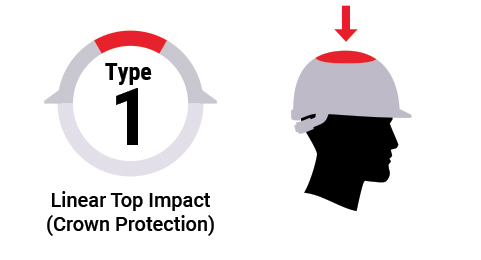
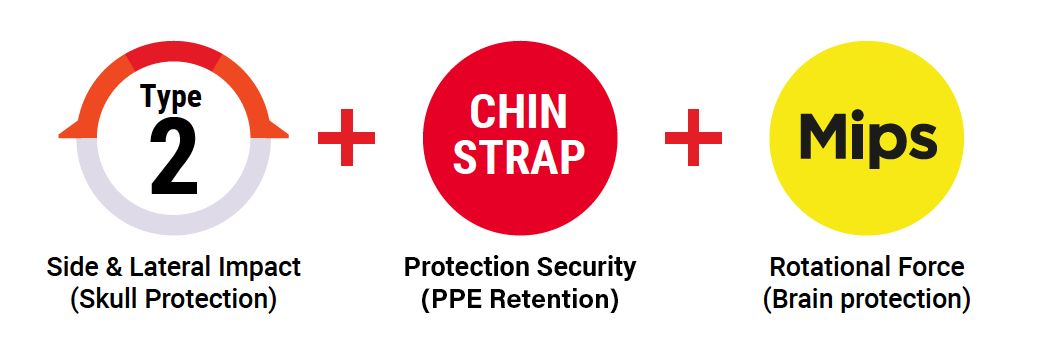
Type 1 protects against straight-down heavy impacts and punctures to the top of the head generally achieved with suspension systems.
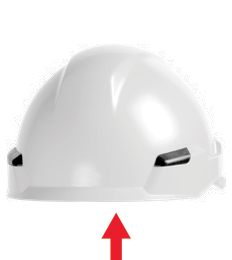
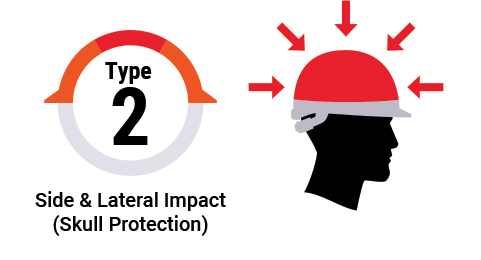
Type 2 Extends that impact protection around the entire head for side and lateral protection. This can be through a standard EPS foam shield or the lightweight, high-impact absorbing Koroyd shell.
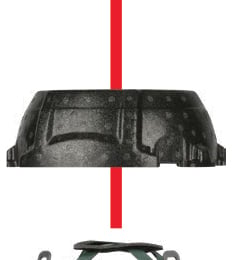
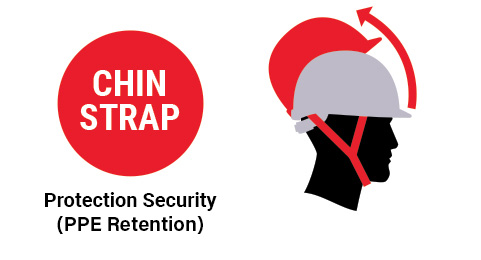
Generally one of the defining factors of a Safety Helmet, Chin Straps prevent loss of head protection during a fall. The best PPE in the world is worthless if it doesn’t stay on.
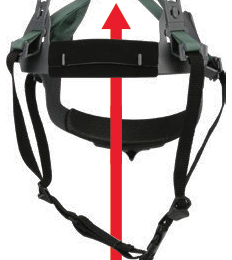
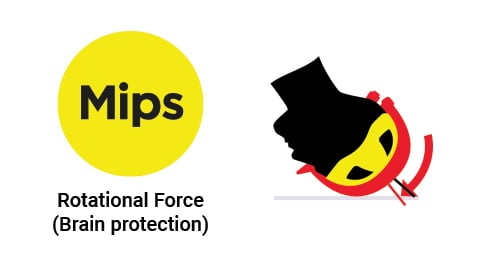
Mips (Multi-Directional Impact Protection System) absorbs rotational force by allowing the helmet to rotate around the skull, critical in preventing brain damage from twisting.
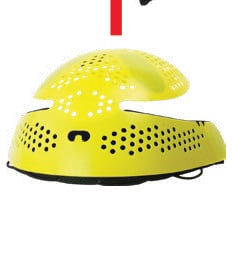

Koroyd offers superior impact protection and ventilation with a super lightweight hollow core shield that absorbs more impact with minimal rebound compared to standard EPS foam shells that harden when compressed.

## On the EN12492 European Standard...
You also may have heard of the EN12492 European Standard. European standards are not ANSI certified and thus do not apply. In addition, the European standard tests scenarios from the perspective of objects falling on a rock climber, not a falling worker’s head impacting on the ground. As such, Side impact tests are less strenuous in the European standard, whereas Type 2 extends the same protection all around the head.
---
## HEAD PROTECTION VS BRAIN PROTECTION

### The brain is one of the softest and most sensitive tissues in the body, with a similar consistency to jello. This might sound amusing, but throughout this jiggly mass is a complex network of nerves and neurons that control everything from motor skills, coordination, and sensory awareness to memory, emotion, and speech.
### All of this boils down to one fact: of all the dangers that should be prevented, head and brain injury is one of the deadliest and most costly to worker and employer alike.
---
## Traumatic Brain Injury (TBI) in the U.S. Construction Industry
## 24%
#### of all workplace TBI cases were in construction
## 57%
#### of construction TBI cases were from falls
## 276
#### avg. deaths/year
## 52%
#### of all TBI survivors experience decline or death within 5 years
---
## LINEAR IMPACT
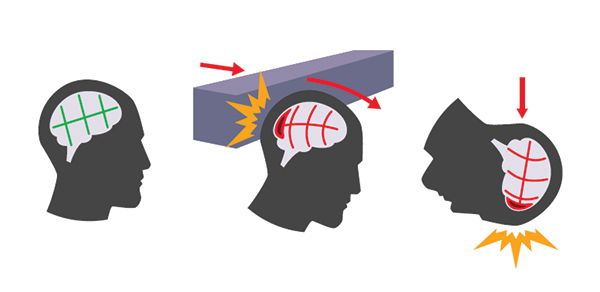
Most hard hats are designed to protect against linear impacts, with Type 1 protecting the top of the head, and Type 2 extending protection to the sides.
Linear impacts are most responsible for skull fractures and, in rare cases, can also cause concussions from compression, stretching, and shearing of the brain.
All that said, linear impacts are very rare. After all, real accidents don’t happen in a lab, and gravity doesn’t care where or how your head hits the ground. The vast majority of head injuries are caused by angled impacts that create rotational force.
## ROTATIONAL FORCE
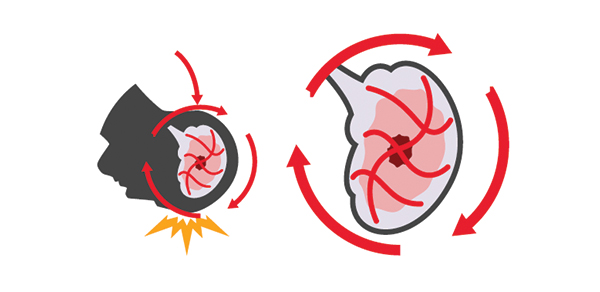
To illustrate the dangers of rotational force, imagine a washing machine: it cleans your clothes by spinning and agitating the fabric to remove contaminants. Rotational force can do the same thing to your brain.
As the head impacts the ground at an angle, your soft brain matter will continue to move or rotate in whatever direction your skull was just before impact.
Depending on the speed, area, and angle of impact, this agitation will ripple throughout the brain, shearing the axons that connect white and gray brain matter and even damaging connections between different parts of the brain: both common results of a concussion.
---
## THE SCIENCE OF HEAD INJURY
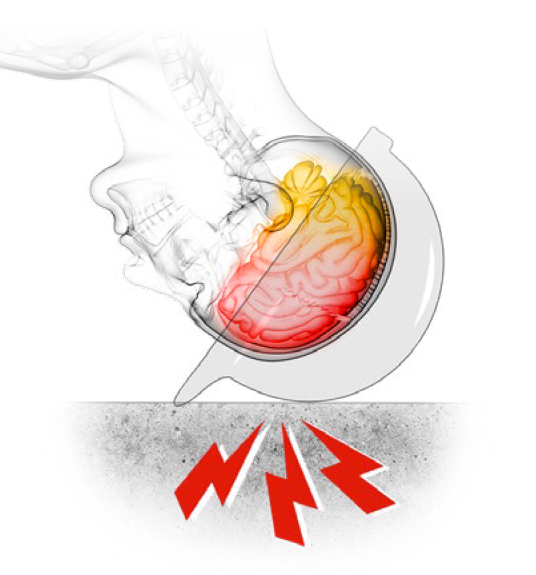
CONCUSSIONS AND TRAUMATIC BRAIN INJURIES ARE COMMONLY THE RESULT OF ROTATIONAL FORCE AND STRAIN TO THE BRAIN.
Injury statistics demonstrate that when someone trips on a level surface, they are more likely to fall at an angle instead of directly on top of the head. This is due to the forward energy of motion that may extend to the head when hitting the hard ground surface. Over the past few years, science has shown that our brains are very sensitive to rotational forces
IN THIS SCENARIO, CONVENTIONAL HARD HATS WITHOUT A CHIN STRAP WOULD LIKELY FLY OFF. A CHIN STRAP HELPS, BUT IS IT ENOUGH?
## INTRODUCING MIPS® TECHNOLOGY
A LOW FRICTION LAYER TO HELP REDUCE THE SEVERITY OF HEAD INJURIES
- At impact the Mips® Safety System is designed to help reduce the amount of rotational force transferred to the head by redirecting the forces that are generated by the impact.
- The Mips® Safety System allows for a 10-15 mm relative movement between the helmet and the head during the critical first 5-10ms of the impact.
- It is not uncommon that the point load on the head/helmet at impact is at 2,200 lbs. – The Mips® Safety System is designed to allow the helmet to move even under this kind of pressure.

---
## ABSORB IMPACT & STAY COOL WITH KOROYD
A HOLLOW CORE SHIELD FOR MAXIMUM VENTILATION & IMPACT ABSORPTION
Most safety helmets use standard EPS foam as a blunt-force shield against impact. This, however, has significant drawbacks when it comes to impact protection. Rather than absorbing impact evenly, traditional materials stiffen as they compress, and solidify at up to 60% of their thickness, directly transferring the remaining forces to the head and brain instead of protecting it.
By contrast, Koroyd's sacrificial array of hollow tubes can use up to 78% of the material’s thickness for maximum energy absorption, taking the brunt of the force,without hardening or rebounding. In addition, absorbing more impact also reduces rotational forces, as there is less force transferred throughout the impact.
## FULLY VENTILATED, LIGHTWEIGHT PROTECTION
Another big benefit of the lightweight design is superior ventilation. Unlike ABS foam shells which insulate the head, Koroyd's hollow core tubes allow air to pass through, greatly increasing ventilation and **reducing interior helmet temperatures by up to 8°F.**
In addition, the helmet becomes significantly lighter, reducing the discomfort and fatigue that comes from heavy helmets and reducing the chances of workers taking them off on the job.
All these benefits combine make for one of the most comfortable, heat-conscious, and protective safety helmet technologies available.
## ULTRALIGHT. PROTECTIVE. BREATHABLE.

### THE ULTIMATE DAMAGE CONTROL SYSTEM
Koroyd’s welded tubes crumple instantly and consistently on impact, absorbing maximum force in a controlled manner, minimizing energy transferred to your head.

## DIRECT AND ANGLED IMPACT PROTECTION
This unique behaviour helps to protect your skull and brain from direct and angled impacts which may reduce the risk of suffering a life-changing injury.

## ULTRA BREATHABLE FOR MAX COOLING
Air flows consistently through the open-cells, whilst hot air from your head can easily escape, ensuring more efficient cooling in the most intense conditions.

## PROTECTION NEVER FELT SO LIGHT
Koroyd features the world’s thinnest walled tubes, resulting in a structure which is 95% air for lightweight comfort without compromising on safety.
---
To ensure the highest level of protection on the market, a Type 2 safety helmet with Mips or Koroyd is your best choice to provide secure, 360 degree protection against linear, angular, and rotational impact, with Koroyd offering increased impact absorption and heat stress prevention.
[](https://www.gosafe.com/ECommerce/CatalogSearch.aspx?SearchStr=PIP280HP149#p-1)
## [PIP Traverse™ Safety Helmet With Mips®](https://www.gosafe.com/ECommerce/CatalogSearch.aspx?SearchStr=PIP280HP149#p-1)
OR

[](https://www.gosafe.com/ECommerce/CatalogSearch.aspx?SearchStr=GE%20GH500&SCID=-1&sescf=True#p-1)
## [GE GH500 Safety Helmet With Koroyd](https://www.gosafe.com/ECommerce/CatalogSearch.aspx?SearchStr=GE%20GH500&SCID=-1&sescf=True#p-1)
---
# WHEN DO YOU NEED TYPE 2 PROTECTION?
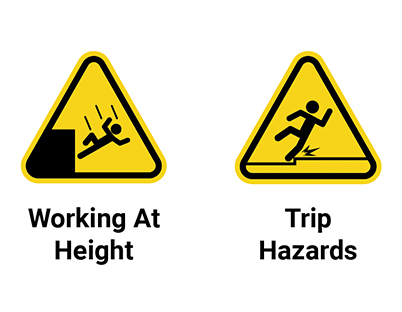
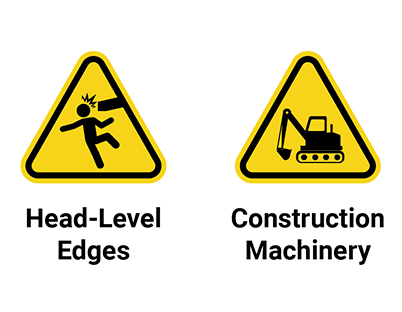
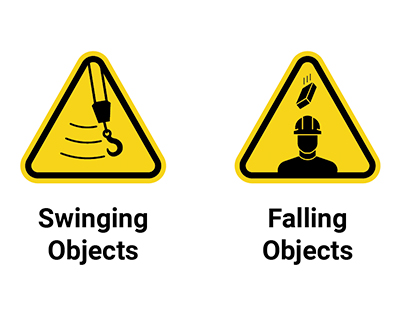
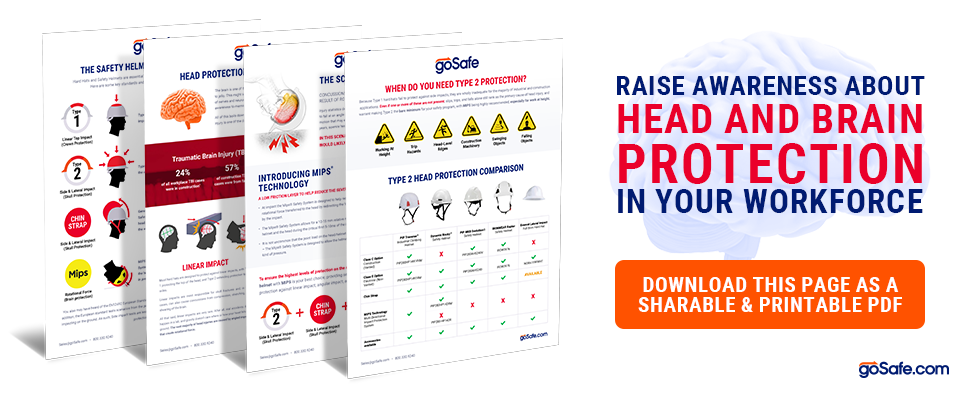
Because Type 1 hard hats fail to protect side impacts, they are inadequate for the majority of industrial and construction applications. Even if one or more of these are not present, slips, trips, and falls alone still rank as the primary cause of head injury, making Type 2 the bare minimum for a proactive safety program, with Mips or Koroyd being highly recommended, especially for work at height.
[](https://hubspot-cta-redirect-na2-prod.s3.amazonaws.com/cta/redirect/2816956/e1284fbe-84e1-486b-9bc4-2626eea4bf25)
[](https://hubspot-cta-redirect-na2-prod.s3.amazonaws.com/cta/redirect/2816956/8068fdc5-e80c-4d1a-91eb-ddce421e85de)
---
## A DEEPER DIVE INTO HEAD PROTECTION
[](https://blog.gosafe.com/the-head-protection-revolution-understanding-the-shift-from-traditional-hard-hats-to-modern-safety-helmets?hsLang=en)
## **The Head Protection Revolution:**
## **Understanding the Shift from Traditional Hard Hats to Modern Safety Helmets**
For decades, the traditional hard hat—a plastic shell suspended above the head—has been the universal symbol of safety on the job site. Yet, across construction, oil and gas, utilities, and general industry, a revolution is underway: the rapid shift toward modern safety helmets.
This push is driven by several factors: First, we have a deeper understanding of head injury mechanisms (particularly lateral impacts and rotational forces) Additionally, the work-at-height community has been severely affected, with approximately one out of three fatal falls being attributable to head injuries. Finally, advanced helmet designs have been introduced with demonstrably superior protection, retention systems and a host of convenience features which greatly increase their appeal.
## **The Great Debate: Hard Hat vs. Safety Helmet**
The confusion stems from a lack of clear differentiation in the industry standard. Both hard hats and safety helmets must comply with the **ANSI/ISEA Z89.1** standard. The true distinction lies in the **Type** and **features** of protection they are designed and tested to provide.
| **Standard** | **Protection Coverage** | **Key Focus** | **Traditional Hard Hat** | **Modern Safety Helmet** |
| --- | --- | --- | --- | --- |
| **Type 1** | Top of the head only | Protection against vertical impact (falling objects). | Common | Available |
| **Type 2** | Top and Lateral (Side) Impact | Protection against vertical, front, back, and side impacts. Essential for mitigating risks from lateral blows or glancing contact. | Rare | Common |
The traditional hard hat is typically a **Type I** device, excelling at protecting the crown of the head from falling debris. However, its suspension system often allows it to easily fall off during a slip or trip, and it provides minimal to no protection against lateral impacts—a leading cause of traumatic brain injuries.
The modern **safety helmet**, often featuring a low-profile, climbing-style shell, is more frequently certified as **Type II**.
### **Key Advantages of Modern Safety Helmets**
- **Secure Fit:** They almost universally include a **chin strap**, which is often required for Type II testing (though not mandatory for all Type II) and is essential for keeping the helmet secure during a fall, preventing it from coming off when a worker slips, trips, or falls from height.
- **Lateral Protection:** They incorporate energy-absorbing features, providing protection against impacts to the front, sides, and rear of the head (Type II).
- **Enhanced Integration:** They are often designed with easy, secure integration points for modular accessories like face shields, headlamps, and hearing protection, which can increase worker compliance and comfort while supporting a holistic approach to safety.
## **The OSHA Bulletin: Encouraging the Shift**
The clearest signal that the industry is changing came from the Occupational Safety and Health Administration (OSHA). On November 22, 2023, OSHA published a **Safety and Health Information Bulletin (SHIB)** titled, "Head Protection: Safety Helmets in the Workplace."
### **Key Takeaways from the SHIB:**
1. **Advisory, Not Regulatory:** The SHIB is advisory; it is **not** a new standard or regulation and does not create new legal obligations. It encourages employers to *consider* modern safety helmets that offer superior protection.
2. **Increased Safety Profile:** The bulletin highlights that modern safety helmets, with their features like chin straps and enhanced impact resistance (Type II), provide a "better overall level of protection" for workers' entire heads compared to traditional hard hats. OSHA's own compliance safety and health officers are switching to modern safety helmets.
3. **Focus on Hazard Assessment:** OSHA’s guidance emphasizes that employers must still conduct a **Job Hazard Analysis (JHA)** to determine the necessary head protection.
## **Justifying Selection with a Job Hazard Analysis (JHA)**
The JHA remains the cornerstone of all PPE selection. The OSHA bulletin does not mandate a specific product, but it does strengthen the argument for selecting Type II helmets in many environments.
To determine if the traditional hard hat is sufficient, or if a modern safety helmet is necessary, the JHA must analyze risks beyond simple overhead impact:
| **JHA Question** | **Hazard Identified** | **Recommended Head Protection Features** |
| --- | --- | --- |
| **Are workers exposed to risks of slips, trips, or falls (especially from height)?** | Loss of head protection, rotational injury. | **Chin Strap** (required for retention), **Type II** (lateral protection). |
| **Is there a risk of lateral impact (e.g., striking the head on beams, equipment, or working in confined spaces)?** | Concussion, traumatic brain injury. | **Type II Certification** (front, side, and rear impact protection). |
| **Are workers frequently switching between tasks requiring hearing, face, or eye protection?** | Compliance failure, cumbersome equipment. | **Integrated accessory slots** (for seamless system attachments). |
| **Are there exposed electrical hazards (high or low voltage)?** | Electrical shock/burn. | **Class E** (Electrical, 20 kV) or **Class G** (General, 2.2 kV) rating. |
By asking these critical questions, employers can justify the selection of Type II safety helmets as the most appropriate Personal Protective Equipment (PPE) to mitigate the full spectrum of modern job site hazards. The head protection revolution is not just about a new look; it’s about a measurable increase in worker safety driven by better design and a clearer understanding of risk.
For those that remain skeptical, it is important to note that this paradigm shift has resulted in the development of a broad array of products with different suspension executions, shell styles, retention methods and adaptable accessories. The result of these innovations isn’t just a safer product, but more options to meet the needs of different functional groups in virtually any setting and risk category.
[](https://hubspot-cta-redirect-na2-prod.s3.amazonaws.com/cta/redirect/2816956/c5c51dd2-6263-4875-ab0e-b72b569c3f53)
[](https://hubspot-cta-redirect-na2-prod.s3.amazonaws.com/cta/redirect/2816956/335c83c6-8574-469e-bede-c16bb020b5ed)
---
[](https://blog.gosafe.com/type-i-vs.-type-ii-decoding-ansi/isea-z89.1-for-multi-directional-impact-protection?hsLang=en)
## **Type I vs. Type II:**
## **Decoding ANSI/ISEA Z89.1 for Multi-Directional Impact Protection**
In the world of construction and industrial safety, the hard hat is the undisputed symbol of protection. However, not all hard hats are created equal. Beneath the surface of these seemingly simple pieces of headwear lies a critical distinction defined by the **ANSI/ISEA Z89.1 standard**: the difference between **Type I** and **Type II** head protection.
Understanding this difference is not just an exercise in compliance—it’s about safeguarding workers against the full spectrum of hazards they face daily.
## **The Fundamental Difference: Top vs. Multi-Directional Impact**
The core of the ANSI/ISEA Z89.1 standard separates hard hats into two types based on the direction of impact they are designed to protect against.
### **Type I Hard Hats: Top Impact Only**
- **Design Focus:** Designed to reduce the force of impact *only* from a blow to the **top of the head**.
- **Protection Mechanism:** Primarily protects against falling objects, such as tools, debris, or materials dropped from above.
- **ANSI/ISEA Z89.1 Testing:** Type I hats are rigorously tested by dropping a weighted penetrator directly onto the crown of the helmet. The goal is to ensure the suspension system and shell can absorb and deflect this specific, vertical energy.
### **Type II Hard Hats: Multi-Directional Impact**
- **Design Focus:** Designed to reduce the force of impact from blows to the **top, front, side, and rear** of the head.
- **Protection Mechanism:** Offers comprehensive protection against falling objects *and* impacts resulting from slips, trips, falls, and dynamic movements where the head may strike a structural component, wall, or vehicle (lateral impacts).
- **ANSI/ISEA Z89.1 Testing:** Type II hats must pass the Type I top-impact test *and* additional tests for lateral impact, which often involves a test weight striking the helmet at an angle on the side or off-center. They are also tested for off-center penetration and proper chin strap retention.
## **The Critical Debate: Why Type I is Insufficient for Common Hazards**
The overwhelming majority of hard hats used on job sites are Type I. While they excel at protecting against the classic scenario of a falling hammer, this protection is alarmingly incomplete when considering the most common construction site injuries.
The **confusion and debate** arise because a significant number of head injuries on site are *not* caused by objects falling directly onto the crown of the head, but rather by **lateral impacts** that occur during:
- **Slips, Trips, and Falls:** A worker slips on scaffolding and the side of their head strikes a steel beam.
- **Walking into Objects:** A worker bumps their head on a horizontal component of a structure, scaffolding, or piping while moving through a cramped space.
- **Falls from Heights:** The head strikes a surface *during the course of a fall*, often resulting in serious or fatal head injuries
- **Vehicle Incidents:** Being struck by a forklift or other moving equipment on the side of the head.
**Type I hard hats offer minimal, if any, certified protection against these lateral/side impacts.** Their suspension system is optimized for vertical energy dissipation, leaving the wearer vulnerable to concussions and serious injury from an oblique blow. They also come without retention straps and often fall off or are dislodged when they are needed most.
**Type II hard hats** address this by incorporating energy-absorbing features—similar to bicycle or ski helmets—that cover the interior of the shell to the sides and back, specifically designed to mitigate the forces of a multi-directional strike. They also (usually) incorporate retention straps to keep them on the user’s head during the course of any potentially injurious contact.
## **Beyond the Shell: The Role of Optional Chin Straps**
One often-overlooked feature in the move towards multi-directional protection is the chin strap.
For a hard hat to protect against a blow, it must be **securely on the worker's head**. During a slip, trip, or fall, the sudden, dynamic movement of the body can easily dislodge a standard Type I hard hat.
The ANSI/ISEA Z89.1 standard includes an optional requirement for chin straps on **Type II hard hats**, designated by the **"C"** marking (e.g., Z89.1-2014 Type II, Class G, **C**).
- **Chin Strap Function:** The strap's role is to ensure the helmet remains in place during a fall or forceful movement, guaranteeing that the protective shell is positioned to absorb the inevitable impact. This is particularly crucial for workers at height or those engaged in active, dynamic tasks.
**This feature is of extreme importance for workers at height.** One out of three fatal falls is attributable to a head injury and Type II hard hats with chin straps could well reduce the number of fatal falls each year by a factor of up to 30%. There is also an opportunity to reduce the number of life-changing injuries that are experienced each year, providing more positive outcomes for literally tens of thousands of American workers.
## **Decoding the Hard Hat Label: Compliance and Classes**
When purchasing head protection, you must look for the full marking printed on the inside of the shell to ensure compliance.
| **Marking** | **Interpretation** |
| --- | --- |
| **ANSI Z89.1-2014** | The Standard Year (or newer, e.g., 2019) |
| **Type I or Type II** | Impact Direction (Top Only vs. Multi-Directional) |
| **Class G, E, or C\*** | Electrical Protection |
| **LT** | Low Temperature (optional) |
| **HT** | High Temperature (optional) |
| **C** | Chin Strap Required (optional, usually with Type II) |
### **\*Electrical Classes:**
- **Class G (General):** Good for general use; tested at 2,200 volts.
- **Class E (Electrical):** Best protection; tested at 20,000 volts.
- **Class C (Conductive):** Offers no electrical protection; typically vented metal or aluminum.
## **Conclusion: Future-Proofing Head Safety**
The difference between a Type I and a Type II hard hat is a matter of outdated versus modern safety philosophy. While Type I has served the industry well for decades, the understanding of workplace dynamics and injury mechanisms clearly shows its limitations.
As an industry, moving toward **Type II hard hats** represents an essential step in future-proofing worker safety by acknowledging that hazards come from **all directions**, not just above. Prioritizing this multi-directional protection, often coupled with a secure chin strap, is the best way to safeguard the most vital asset on any job site: the human brain.
[](https://hubspot-cta-redirect-na2-prod.s3.amazonaws.com/cta/redirect/2816956/29941f60-34eb-4f42-a3f1-15b0d8b18093)
[](https://hubspot-cta-redirect-na2-prod.s3.amazonaws.com/cta/redirect/2816956/335c83c6-8574-469e-bede-c16bb020b5ed)
---
[](https://blog.gosafe.com/the-role-of-bump-caps-misuse-limitations-and-when-they-are-truly-appropriate?hsLang=en)
## **The Role of Bump Caps:**
## **Misuse, Limitations, and When They are Truly Appropriate**
In industrial and construction environments, head protection is non-negotiable. However, a persistent confusion exists regarding *what kind* of head protection is necessary. This confusion centers on the humble bump cap—a piece of PPE that often looks like a stylish baseball cap but contains a thin plastic shell.
The debate over "bump cap vs. hard hat" is one of the most common, and potentially dangerous, misunderstandings in workplace safety. Too often, bump caps are viewed as a more comfortable, "good enough" substitute for a full hard hat.
This article aims to clarify the specific, limited role of bump caps, definitively state why they never replace an ANSI-rated helmet, and outline the regulatory realities governing their use.
## **The Danger of "Good Enough"**
The appeal of bump caps is obvious. They are lightweight, often better ventilated, and look less "industrial" than a traditional hard hat. For workers doing strenuous tasks in hot environments, the temptation to swap a hard hat for a bump cap is high.
This led to widespread misuse, where workers in zones with overhead hazards are wearing PPE designed only for minor scrapes. It is vital to understand that a bump cap is not a "hard hat lite." They are fundamentally different tools designed for entirely different physical forces.
## **What a Bump Cap Is (And What It Isn’t)**
To understand the limitations of a bump cap, you must understand its design intent.
A **bump cap** is designed solely to protect the wearer from minor bumps, lacerations, and abrasions caused by the worker’s head striking a *stationary* object. Think of walking into a low-hanging pipe, scraping your head while crawling under machinery, or bumping into a protruding beam in a tight space. The energy involved in these impacts is low, and it is generated by the worker moving, not the object.
A **hard hat**, by contrast, is engineered with a rigid shell and an internal suspension system designed to absorb the massive impact energy of a *falling* object, or to provide protection against electrical hazards.
**The critical distinction is the direction of force:**
- **Bump Caps** protect against *you moving into something*.
- **Hard Hats** protect against *something moving into you* (or falling on you).
If a wrench drops from two stories up, a bump cap will offer virtually no protection against a catastrophic brain injury or skull fracture. The thin shell will crack immediately, transferring the full force of the impact directly to the skull.
## **Standards and Compliance: The Hard Line**
The distinction between these two types of PPE isn't just practical; it is regulatory.
In the United States, occupational head protection is governed by **OSHA standard 29 CFR 1910.135**. This standard requires employers to provide protective helmets where there is a potential for injury to the head from falling objects. It also requires helmets designed to reduce electrical shock hazards where those exist.
To meet this OSHA requirement, head protection must comply with consensus standards, specifically **ANSI/ISEA Z89.1** (American National Standard for Industrial Head Protection).
**Here is the definitive compliance reality:**
**Bump caps do NOT meet the requirements of ANSI Z89.1.** Therefore, they do **not** satisfy OSHA requirements for environments where falling object hazards exist.
ANSI has a separate standard for "Industrial Bump Caps" (ISEA Z89.1-2014), which specifically defines them as intended to protect against the effects of striking the head against stationary objects. They are explicitly *not* intended to provide protection against falling objects or electrical shocks.
## **When Are Bump Caps Truly Appropriate?**
If bump caps don't meet hard hat standards, why do they exist? Because in the right environment, they are excellent safety tools that prevent countless stitches and concussions.
Bump caps are appropriate **only** in work environments where a comprehensive risk assessment has determined there is **zero risk** of falling objects, flying projectiles, or electrical contact hazards to the head.
They are designed for tight quarters and low-clearance areas where the primary hazard is the worker bumping their own head.
**Examples of appropriate applications include:**
- **Maintenance mechanics** working underneath vehicles or inside large machinery where quarters are tight.
- **Airline baggage handlers** working in cargo holds with low ceilings.
- **Food processing or manufacturing workers** navigating around complex conveyor systems and low-hanging stationary equipment.
- **Plumbers or electricians** working in crawl spaces or attics (provided there are no exposed electrical hazards overhead that require a Class G or E hard hat).
- **Meter readers** entering low-clearance basements.
## **Managing the Use via the Job Hazard Analysis (JHA)**
The decision to allow bump caps should never be based on worker preference or comfort alone. It must be a data-driven decision based on a **Job Hazard Analysis (JHA)** or Risk Assessment.
If the site's JHA identifies *any* potential for falling objects—tools dropped from scaffolding, materials shifting on high shelves, debris falling from a floor above—a hard hat is mandatory. The conversation ends there.
However, if the JHA confirms the only head hazards are stationary, low-energy bumps in confined areas, specifying a bump cap is not only acceptable, it may be preferred as it increases worker comfort and compliance in tight spaces.
## **Conclusion: Future-Proofing Head Safety**
Treating a bump cap as a substitute for a hard hat is a gamble with catastrophic stakes. Safety managers must be rigid in enforcing the distinction. Bump caps have a valuable role in preventing minor injuries in specific, low-hazard environments. But in the general construction or industrial landscape, where gravity and heavy objects are constant threats, only an ANSI-rated hard hat provides the necessary line of defense.
[](https://hubspot-cta-redirect-na2-prod.s3.amazonaws.com/cta/redirect/2816956/eb00fd57-eade-46ed-a205-974086525ca1)
[](https://hubspot-cta-redirect-na2-prod.s3.amazonaws.com/cta/redirect/2816956/335c83c6-8574-469e-bede-c16bb020b5ed)
---
[](https://blog.gosafe.com/head-protection-accessory-integration-maintaining-compliance-with-face-shields-and-attachments?hsLang=en)
## **Head Protection Accessory Integration:**
## **Maintaining Compliance with Face Shields and Attachments**
The safety industry is currently witnessing a significant shift. Traditional hard hats are increasingly being swapped for **Type 2 safety helmets**—those sleek, climber-style lids with chin straps. While this move offers enhanced lateral impact protection, it has introduced a complex challenge: **Accessory Integration.**
When you start snapping on face shields, welding hoods, and ear muffs, you aren't just "customizing" your gear; you’re altering a precision-engineered safety system. If those components weren't designed to work together, you might be trading one risk for another.
## **The "Frankenstein" Helmet: Why Mixing Brands is Risky**
It’s a common sight on job sites: a worker with a Brand A helmet, a Brand B face shield bracket, and Brand C hearing protection. While the "universal" adapters might seem to click into place, they often create a **"Frankenstein" assembly** that hasn't been tested as a single unit.
**1. The Death of the Dielectric Rating**
One of the most overlooked risks involves **Class E (Electrical)** and **Class G (General)** ratings.
- **The Conflict:** Many third-party attachments use metal screws, rivets, or conductive brackets to secure face shields or lights.
- **The Consequence:** Adding a metal component to a Class E helmet can instantly bridge the path for an electrical arc, effectively voiding the helmet's dielectric strength and putting the wearer at risk of electrocution.
**2. Compromising Type 2 Stability**
Type 2 helmets are specifically designed to protect against impacts to the front, back, and sides, not just the top. They rely on a precise center of gravity.
- **The Conflict:** Heavy, non-integrated welding hoods or lighting systems can pull the helmet forward or tilt it to the side.
- **The Consequence:** This imbalance can cause the suspension system to fail during an impact or lead to chronic neck strain and "helmet fatigue," tempting workers to leave the chin strap undone—negating the helmet's primary benefit.
## **ANSI Z89.1: The Compliance Reality Check**
The **ANSI/ISEA Z89.1** standard is clear, yet often misunderstood. When a manufacturer certifies a helmet, they certify it in the condition it was tested.
**Crucial Rule:** Any accessory added to a head protector must not degrade the performance of the helmet. ANSI Z89.1 warns that users should only use accessories specifically authorized by the helmet manufacturer.
**Voiding the Certification**
If you drill holes into a shell to mount a lamp or use a bracket that puts undue stress on the accessory slots, you have likely **voided the ANSI/CSA certification**. In the event of an accident, an "out of compliance" helmet can lead to denied insurance claims and OSHA citations.
## **The Solution: Manufacturer-Approved Integrated Systems**
The safest way to build a multi-hazard protection kit is to stick to **Integrated Systems**. Modern manufacturers now design "ecosystems" where the helmet, shield, and earmuffs are tested together.
### **Benefits of Integrated Systems:**
- **Weight Distribution:** Accessories are counterbalanced to maintain the helmet's natural pivot point.
- **Non-Conductive Materials:** Integrated brackets are typically made of high-strength polymers to maintain Class E ratings.
- **Seamless Transitions:** Face shields that "nest" perfectly against the shell when flipped up, reducing snag hazards.
- **Tested Peak Force:** Ensuring that the addition of a shield doesn't increase the force transmitted to the neck during a fall.
## **Summary Checklist for Compliance**
Before you head out to the site with your new setup, ask yourself:
1. **Is it Brand-Matched?** Does the manufacturer of the helmet specifically list this accessory as compatible?
2. **Does it Maintain the Class?** If I'm working near high voltage, does this attachment use any metal?
3. **Is the Type 2 Integrity Intact?** Does the helmet still sit level on my head with the shield attached?
Safety isn't just about wearing the gear; it's about ensuring the gear can actually do its job when things go wrong. Don’t let an inexpensive "universal" bracket compromise an expensive - and effective - safety helmet.
[](https://hubspot-cta-redirect-na2-prod.s3.amazonaws.com/cta/redirect/2816956/78d88885-cb82-4cd0-a603-15e21fb312e7)
[](https://hubspot-cta-redirect-na2-prod.s3.amazonaws.com/cta/redirect/2816956/335c83c6-8574-469e-bede-c16bb020b5ed)
---
[](https://blog.gosafe.com/proper-fit-inspection-and-service-life-maximizing-the-performance-of-head-and-face-ppe?hsLang=en)
## **Proper Fit, Inspection, and Service Life:**
## **Maximizing the Performance of Head and Face PPE**
In the world of safety, "close enough" is a dangerous philosophy. For decades, the industry standard for head and face protection was simply *possession -* if you were wearing a hard hat, you were compliant. But as of January 2025, OSHA shifted the goalposts with a major update to **29 CFR 1926.95**, mandating that PPE must not only be provided but must **properly fit** each individual worker.
Whether you’re a site supervisor or a veteran on the tools, maximizing PPE performance isn't just about avoiding a citation; it’s about ensuring that when a 5 lb. bolt falls from the third floor, your gear actually does its job.
## **Fit is the New Compliance (29 CFR 1926.95)**
OSHA's recent emphasis on "Proper Fit" addresses a long-standing gap in construction safety. Ill-fitting headgear - that wobble, slide forward, or pinch - doesn't just cause headaches; it fails during an impact. Under the updated standard, employers must ensure PPE is sized for the diverse anatomy of today’s workforce, including women and workers with smaller or larger frames.
## **The Suspension: Your Head’s Secret Bodyguard**
The most common on-site misstep? Thinking the plastic shell does all the work. In reality, the **suspension system** is the MVP. It’s designed to act as a shock absorber, stretching to dissipate kinetic energy before it reaches your skull.
- **The Adjustment Error:** Most workers only use the rear ratchet to tighten the hat. However, most modern suspensions also have **vertical height adjustments** (the plastic keys that plug into the shell). If your hard hat sits too high, it’s unstable; too low, and you lose the critical 1" to 1.25" gap between your head and the shell.
- **The Gap Rule:** If your head is touching the inside of the shell, the suspension is useless. You need that "crumple zone" to survive an impact.
## **The Great Debate: The 5-Year Replacement Rule**
There is a common misconception that hard hats have a legal "expiration date" of five years. Here is the reality: **OSHA doesn't set the date - manufacturers do.**
While most manufacturers suggest replacing the shell every **five years**, this is a *maximum* guideline. If you work in high-UV environments (Texas summers, anyone?), around harsh chemicals, or in extreme heat, that shell might be "cooked" and brittle in just **two years**.
| **Component** | **Standard Replacement Guide** | **Why?** |
| --- | --- | --- |
| **Suspension** | Every 12 Months | Sweat, hair oils, and constant tension degrade the webbing. |
| **Shell** | 2–5 Years | UV radiation and temperature swings make plastic brittle. |
| **Face Shield** | Upon Scratching/Cracking | Pitting and scratches reduce visibility and impact resistance. |
## **The "No-Fly Zone": Stickers, Solvents, and Stealth Damage**
We get it - stickers are a badge of honor. But before you turn your lid into a scrapbook, consider the risks:
1. **Hidden Cracks:** A well-placed sticker can hide a hairline fracture that would otherwise fail a pre-shift inspection.
2. **Chemical Sabotage:** Many adhesives and solvents in paints can "melt" or weaken the polymers in the shell, turning a Grade-A protector into a brittle piece of Tupperware.
3. **Conductivity:** Metallic stickers can turn a Class G or E hard hat into a lightning rod.
**The Rule:** Only use pressure-sensitive, non-metallic stickers, and keep them at least 0.5 inches away from the edge. If you must paint it, check the manufacturer's approved list of coatings first.
## **Supervisor’s On-Site Inspection Checklist**
To keep your crew compliant and safe, incorporate these three "quick checks" into your daily walkthrough:
- **\[ \] The Flex Test:** Squeeze the shell with both hands. It should be elastic and return to its shape. If you hear "cracking" or "creaking," the shell is compromised.
- **\[ \] The Chalky Finish:** If the shell looks dull or "chalky" (oxidation), the UV rays have won. It’s time for a replacement.
- **\[ \] The Suspension Snag:** Check the plastic attachment points. If the keys are frayed or the webbing is torn, the hat is no longer an impact-rated device.
## **Maximizing Service Life**
To get the most out of your gear, store it out of the sun (avoid the truck dashboard!) and clean it with mild soap and water only. Your brain is your most valuable tool - make sure the box you put it in is up to the task.
[](https://hubspot-cta-redirect-na2-prod.s3.amazonaws.com/cta/redirect/2816956/5d6a3513-2c34-43e0-a4bc-3bed5362ba92)
[](https://hubspot-cta-redirect-na2-prod.s3.amazonaws.com/cta/redirect/2816956/335c83c6-8574-469e-bede-c16bb020b5ed)
---
[](https://blog.gosafe.com/welding-helmet-technology-adfs-true-color-and-paprs?hsLang=en)
## **Welding Helmet Technology:**
## **ADF's, True Color, and PAPR's**
The welding industry is currently undergoing a technological renaissance, and at the epicenter of this evolution is the most iconic piece of PPE: the welding helmet. No longer just a passive "bucket" with a dark piece of glass, modern headtops have evolved into sophisticated optoelectronic devices designed to maximize both welder productivity and long-term health.
In this deep dive, we explore the three pillars of modern welding helmet technology: Auto-Darkening Filters (ADFs), True Color optics, and the critical integration of respiratory protection.
## 1. The ADF Revolution: Beyond the Passive Lens
For decades, the standard was the "passive" helmet—a fixed-shade #10 or #12 glass filter. While reliable, passive lenses require the "nod" or "flick" of the neck to drop the hood before striking an arc.
**The Advancement:** Auto-Darkening Filters (ADFs) use Liquid Crystal Display (LCD) technology and light sensors to switch from a light state (usually shade 3 or 4) to a dark state in a fraction of a millisecond (often 1/20,000 to 1/30,000 of a second).
**The Debate:** Some traditionalists argue that passive lenses offer superior "crispness" and zero risk of electronic failure. However, the ergonomic benefits of ADFs are indisputable. By eliminating the constant neck-snapping motion required to lower a passive hood, ADFs significantly reduce cervical strain and "welder’s neck." Furthermore, ADFs allow for "tack welding" with extreme precision, as the welder can see exactly where the electrode is positioned before the arc starts.
## 2. The Shift to True Color Optics
Historically, looking through a welding helmet felt like looking through a green Heineken bottle. This "green tint" was a byproduct of the infrared and ultraviolet filters used in LCD technology.
**The Innovation:** The industry is rapidly shifting toward **True Color Technology**. By adjusting the coatings on the interference filters, manufacturers have broadened the light spectrum that passes through the lens. This allows welders to see a more natural range of colors—specifically reds and blues—rather than a monochromatic green wash.
**Why it Matters:** True Color isn't just about aesthetics; it’s a safety and quality tool.
- **Heat Tint Recognition:** Welders can better see the heat-affected zone (HAZ) and the color of the weld puddle.
- **Precision:** It is easier to distinguish between the arc and the base metal.
- **Safety:** Peripheral vision is improved, and the welder can read control panels or see warning lights without removing the helmet.
## 3. Respiratory Integration: The Rise of PAPRs
Perhaps the most significant shift in welding PPE is the move toward "integrated protection." Welding fumes contain a cocktail of hexavalent chromium, manganese, and nickel, which are linked to serious respiratory illnesses.
**The Solution: PAPR (Powered Air-Purifying Respirator)** Instead of wearing a disposable N95 mask under a standard hood—which often leads to fogging and discomfort—professional welders are moving toward integrated PAPR systems.
A PAPR system consists of a battery-powered blower unit worn on a belt that pulls ambient air through a HEPA filter and delivers a constant stream of clean air into the welding helmet via a breathing tube.
**Benefits of Integration:**
- **Positive Pressure:** These systems provide a higher Assigned Protection Factor (APF) than standard masks because they create a positive pressure environment inside the hood, pushing contaminants out.
- **Cooling Effect:** The constant airflow reduces the temperature inside the helmet by up to 10-15 degrees, a massive advantage in heavy industrial environments.
## 4. Standards and Compliance: Understanding the Labels
When selecting a helmet, "looks cool" isn't a metric. Compliance is mandatory.
- **ANSI Z87.1 (General Face Protection):** This is the baseline standard for impact resistance. Every welding helmet must meet Z87.1 to ensure the lens and shell can withstand high-velocity impact from flying slag or broken grinding wheels.
- **ANSI Z89.1:** If you are working on a site that requires a hard hat, your welding helmet must be compatible with or integrated into a shell that meets Z89.1.
- **Optical Clarity (EN 379):** While a European standard, the "1/1/1/1" rating is used globally to define optical quality. It measures:
1. **Optical Quality:** How distorted is the image?
2. **Diffusion of Light:** Is the image blurry?
3. **Variations in Luminous Transmittance:** Is the shading consistent across the whole lens?
4. **Angle Dependency:** Does the shade change when looking at an angle?
## Conclusion
The welding helmet has transformed from a simple shield into a high-tech command center. By investing in **Auto-Darkening** for efficiency, **True Color** for precision, and **PAPR integration** for long-term health, welders aren't just protecting their faces—they are enhancing their craft. As technology continues to move toward "smart" helmets with Heads-Up Displays (HUD), the line between welding and high-tech manufacturing continues to blur.
[](https://hubspot-cta-redirect-na2-prod.s3.amazonaws.com/cta/redirect/2816956/f00ecb8b-4aa3-4aa7-87df-0ac13baa5468)
[](https://hubspot-cta-redirect-na2-prod.s3.amazonaws.com/cta/redirect/2816956/335c83c6-8574-469e-bede-c16bb020b5ed)
---
[](https://blog.gosafe.com/assessing-workplace-hazards-how-to-select-the-right-head-and-face-ppe-electrical-arc-flash-heat?hsLang=en)
## **Assessing Workplace Hazards:**
## **How to Select the Right Head and Face PPE (Electrical, Arc Flash, Heat)**
Industrial environments present an array of overlapping dangers. On any given shift, a worker might face the threat of a falling tool, a sudden high-voltage electrical arc, or intense radiant heat. When it comes to mitigating these risks, head and face Personal Protective Equipment (PPE) serves as the literal last line of defense.
However, specifying the correct gear is rarely a matter of picking a standard hard hat and clear visor off the shelf. Misinterpreting compliance codes can have catastrophic consequences. This procedural guide breaks down how to accurately assess your facility’s hazards and precisely match your head and face protection to electrical, arc flash, and high-heat environments.
## The Compliance Landscape: Decoding the Standards
Before evaluating specific workplace hazards, safety managers must understand the core compliance frameworks governing head and face protection.
### Head Protection: ANSI/ISEA Z89.1
The American National Standard for Industrial Head Protection categorizes hard hats and safety helmets by two metrics: **Impact Type** and **Electrical Class**.
#### 1. Impact Types
- **Type I:** Designed to reduce the force of impact resulting from a blow only to the **top of the head** (e.g., a dropped bolt from an overhead walkway).
- **Type II:** Designed to reduce the force of impact resulting from a blow to the **top, sides, front, and back of the head** (e.g., lateral impacts from swinging equipment or slips and falls).
#### 2. Electrical Classes
This is where the most dangerous field misunderstandings occur. ANSI Z89.1 divides headwear into three distinct electrical performance categories:
- **Class C (Conductive):** These helmets are **not** intended to provide protection against electrical hazards. They often include built-in vents for comfort, which create a direct path for electrical current.
- **Class G (General):** Tested to withstand **2,200 volts** (phase-to-ground). They provide reliable protection against low-voltage hazards but are entirely inadequate for high-voltage industrial distribution systems.
- **Class E (Electrical):** Tested to withstand **20,000 volts** (phase-to-ground). These helmets offer the highest level of protection against high-voltage electrical energy.
### Face Protection: ANSI/ISEA Z87.1 vs. ASTM F2178
A common compliance failure is assuming a standard face shield is suitable for all facial hazards.
- **ANSI Z87.1** governs general occupational eye and face protection. It certifies shields for **impact, chemical splash, and basic optical radiation** (like welding tint), but it does *not* test for the explosive thermal energy of an electrical arc.
- **ASTM F2178** is the definitive standard for measuring the arc rating of eye or face protective products. If an employee faces an arc flash hazard, their face shield **must** carry an Arc Thermal Performance Value (ATPV) or Energy Breakopen Threshold (Ebt) rating under this standard.
## **Settling the Debates: Common Misconceptions Explained**
### **Debate 1: Class G vs. Class E - The Danger of "Good Enough"**
A frequent misunderstanding is that Class G helmets provide sufficient protection for standard industrial electrical maintenance because "most lines are under 600V."
This is a flawed and dangerous assumption. Hard hat electrical classes do not simply map to the nominal voltage of the equipment being serviced; they account for potential transient overvoltages, inductive coupling, and structural degradation of the helmet over time. Class E helmets undergo rigorous dielectric testing at 20,000 volts to ensure a massive margin of safety. Class G helmets are designed primarily to protect against accidental contact with exposed, low-voltage conductors, not active electrical work.
### **Debate 2: When is a Non-Vented Shell Mandatory?**
With the rising popularity of modern, climbing-style safety helmets, workers frequently demand vented models to combat heat stress. However, **any ventilation slot or hole inherently violates Class G and Class E requirements.**
A non-vented shell is strictly mandatory in the following scenarios:
1. Any task where there is a calculated risk of accidental contact with live electrical conductors (NFPA 70E boundaries).
2. Environments featuring high radiant heat, molten metal splash, or ambient sparks, where vents could allow hot particulates or liquid metal to bypass the shell and make direct contact with the scalp.
If electrical or thermal hazards are present, the comfort of ventilation must be sacrificed for the absolute structural barrier of a solid, non-vented shell.
### **Debate 3: Impact Shields vs. Arc-Rated Shields**
Using a heavy-duty ANSI Z87.1 impact-rated polycarbonate face shield during electrical switching is an OSHA citation waiting to happen - and a recipe for severe injury.
Under the intense heat of an arc flash (which can reach 35,000°F), standard polycarbonate shields will instantly ignite, melt onto the worker's face, or shatter under the accompanying pressure blast. Arc-rated shields are specifically formulated with visible light transmitters and thermal absorbers that block the intense infrared and ultraviolet energy while resisting ignition and structural breakdown.
## **A Step-by-Step Procedural Guide to PPE Selection**
To ensure your team is equipped correctly, follow this systematic evaluation process for every environment.
### **Step 1: Execute the Incident Energy and Voltage Analysis**
Before buying gear, consult your facility’s latest electrical engineering study.
- Identify the **nominal voltage** of the equipment. If it exceeds 1,000V, a Type I or II, Class E helmet is non-negotiable.
- Identify the **calculated incident energy** (expressed in cal/cm2) at the specific working distance. This metric determines your NFPA 70E Arc Flash PPE Category (Categories 1 through 4).
### **Step 2: Match Head Protection to the Electrical and Physical Hazard**
- **For Low-Risk General Industrial Work (No Electrical Exposures):** Select an ANSI Z89.1 Type I or Type II, Class C (vented) helmet for optimal cooling.
- **For General Construction Near Low-Voltage Lines:** Select an ANSI Z89.1 Type I, Class G helmet.
- **For Utility Work, Electrical Substations, or Energized Maintenance:** Select an ANSI Z89.1 Type I or II, **Class E (Non-Vented)** helmet.
*Safety Note:* If the worker is at risk of falling from heights while performing electrical work, opt for a Type II Class E helmet featuring an integrated chin strap to ensure the helmet remains securely in place during a fall event.
### **Step 3: Select Face Protection Based on the Primary Hazard Dynamics**
**Scenario A: High-Heat and Molten Metal Environments (Foundries, Glass Manufacturing)**
- **The Hazard:** Intense radiant heat (*IR*), flying sparks, and liquid metal splash.
- **The Selection:** Choose an ANSI Z87.1 face shield specifically marked for heat resistance (often constructed from specialized acetate or gold-coated polycarbonates that reflect radiant energy). Pair this with a high-heat resistant helmet shell (such as fiberglass or advanced resin compounds) capable of withstanding temperatures exceeding 350°F without warping.
**Scenario B: Arc Flash Environments (Electrical Panels, Switchgear)**
- **The Hazard:** Arc flash thermal energy, concussive blasts, and blinding light.
- **The Selection:** Look exclusively for shields certified under ASTM F2178.
- For **NFPA 70E PPE Category 1 or 2 (≤ 8 cal/cm2):** An arc-rated face shield attached directly to a Class E hard hat, paired with an arc-rated balaclava, is generally acceptable.
- For **NFPA 70E PPE Category 3 or 4 (\> 8 cal/cm2 up to 40 cal/cm2):** A full arc flash hood that completely encapsulates the head and face is required. The face shield must be integrated into the hood garment and match or exceed the total system arc rating.

## **Conclusion**
When selecting head and face PPE, generalizations are dangerous. A hard hat that protects against an overhead impact in a warehouse can act as a conductor in an electrical vault. A face shield designed to deflect chemical splashes can melt instantly in front of an electrical arc.
To keep your workforce safe and maintain strict OSHA and NFPA 70E compliance, always verify the labels. Look for ANSI Z89.1 Class E markings when electrical hazards exist, insist on non-vented configurations when working near heat or voltage, and never substitute an ANSI Z87.1 impact shield for an ASTM F2178 arc-rated system. By conducting rigorous hazard assessments and matching your gear to these precise standards, you ensure that your team's most vital lines of defense never fail them.
[](https://hubspot-cta-redirect-na2-prod.s3.amazonaws.com/cta/redirect/2816956/11edd34b-10da-436b-a6bc-6dd39ed2b4a1)
[](https://hubspot-cta-redirect-na2-prod.s3.amazonaws.com/cta/redirect/2816956/335c83c6-8574-469e-bede-c16bb020b5ed)
---
**goSafe's Blog Articles on Head Protection**
- [The Head Protection Revolution: Understanding the Shift from Traditional Hard Hats to Modern Safety Helmets](https://blog.gosafe.com/the-head-protection-revolution-understanding-the-shift-from-traditional-hard-hats-to-modern-safety-helmets?hsLang=en)
- [Type I vs. Type II: Decoding ANSI/ISEA Z89.1 for Multi-Directional Impact Protection](https://blog.gosafe.com/type-i-vs.-type-ii-decoding-ansi/isea-z89.1-for-multi-directional-impact-protection?hsLang=en)
- [The Role of Bump Caps: Misuse, Limitations, and When They are Truly Appropriate](https://blog.gosafe.com/the-role-of-bump-caps-misuse-limitations-and-when-they-are-truly-appropriate?hsLang=en)
- [Head Protection Accessory Integration: Maintaining Compliance with Face Shields and Attachments](https://blog.gosafe.com/head-protection-accessory-integration-maintaining-compliance-with-face-shields-and-attachments?hsLang=en)
- [Proper Fit, Inspection, and Service Life: Maximizing the Performance of Head and Face PPE](https://blog.gosafe.com/proper-fit-inspection-and-service-life-maximizing-the-performance-of-head-and-face-ppe?hsLang=en)
- [Welding Helmet Technology: ADF's, True Color, and PAPR's](https://blog.gosafe.com/welding-helmet-technology-adfs-true-color-and-paprs?hsLang=en)
- [Assessing Workplace Hazards: How to Select the Right Head and Face PPE (Electrical, Arc Flash, Heat)](https://blog.gosafe.com/assessing-workplace-hazards-how-to-select-the-right-head-and-face-ppe-electrical-arc-flash-heat?hsLang=en)
---
[](https://hubspot-cta-redirect-na2-prod.s3.amazonaws.com/cta/redirect/2816956/a9713f70-b838-4139-a81d-38493d679874)
[](https://hubspot-cta-redirect-na2-prod.s3.amazonaws.com/cta/redirect/2816956/335c83c6-8574-469e-bede-c16bb020b5ed)
Copyright © 2026 - All Rights Reserved - gosafe.com
[](https://twitter.com/gosafeSupply)
[](https://www.instagram.com/gosafesupply/)
[](https://www.linkedin.com/company/gosafesupply)
[](https://www.facebook.com/gosafesupply)
```json
{
"@context" : "https://schema.org",
"@type" : "VideoObject",
"contentUrl" : "https://2816956.fs1.hubspotusercontent-na2.net/hubfs/2816956/video_assets/393105128147/inherited/web_optimized.mp4",
"dateModified" : "2026-09-08T17:59:53.325Z",
"duration" : "PT22S",
"height" : 700,
"name" : "KOROYD-PromoS",
"thumbnailUrl" : "https://2816956.fs1.hubspotusercontent-na2.net/hubfs/2816956/KOROYD-PromoS.mp4/medium.jpg",
"uploadDate" : "2026-09-08T17:59:50.885Z",
"width" : 1000
}
```
```json
{
"@context" : "https://schema.org",
"@type" : "VideoObject",
"contentUrl" : "https://2816956.fs1.hubspotusercontent-na2.net/hubfs/2816956/video_assets/393479280374/inherited/web_optimized.mp4",
"dateModified" : "2026-09-09T13:23:13.547Z",
"duration" : "PT2S",
"height" : 700,
"name" : "KoroydVent",
"thumbnailUrl" : "https://2816956.fs1.hubspotusercontent-na2.net/hubfs/2816956/KoroydVent.mov/medium.jpg",
"uploadDate" : "2026-09-09T13:23:11.891Z",
"width" : 1000
}
```